
Taking EDGE Finance Training on the Road in Northern Ireland

EDGE colleagues Roberto Aguiar and Stevie Barre recently returned from their trip to Northern Ireland, where they delivered EDGE finance training across three Trusts, Western Health and Social Care Trust, Belfast Health and Social Care Trust, and Southern Health and Social Care Trust.

The visit provided an opportunity to work directly with teams on the ground, supporting the rollout of finance tools that Stevie and EDGE Community Champion Mat Davis have developed and refined over the years to complement EDGE’s finance functionality. Stevie had the following words to say regarding this recent trip:

“Getting out on the road across all three sites and visiting the teams was a fantastic experience for both Roberto and me. Meeting everyone in person made a massive difference. Putting faces to names made it much more personable and gave the teams an opportunity to get to know me as their Client Manager.”

The engagement across all three sites was a real highlight for both Roberto and Stevie. Teams asked insightful questions, shared practical suggestions and provided valuable feedback on how the tools could support their day-to-day work. Roberto shared:

“It was also great to see first-hand how EDGE and the finance tools could help teams save time, improve efficiency and support cost recovery, helping to maximise funds available for reinvestment in research.”

The feedback given has already led to improvements, with Stevie and Roberto taking ideas from the sessions to further refine the tools and explore ways to make EDGE even more efficient.

With a warm welcome at every site and strong engagement from each team, the visit was a valuable opportunity to share knowledge, strengthen relationships and demonstrate the wider benefits EDGE can bring to finance and research management. From all of us at EDGE, we would like to say a big thank to you all of those involved across the Northern Ireland sites!
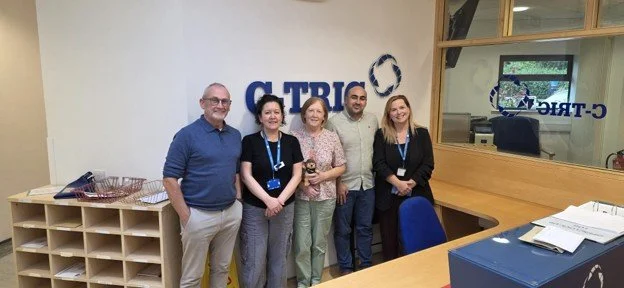
Stevie & Roberto pictured with Liz Macari, Research Administrator, Paulette Higgenbotham, Research Facilitator and Diane Mackey, Research Manager, Western Health and Social Care Trust
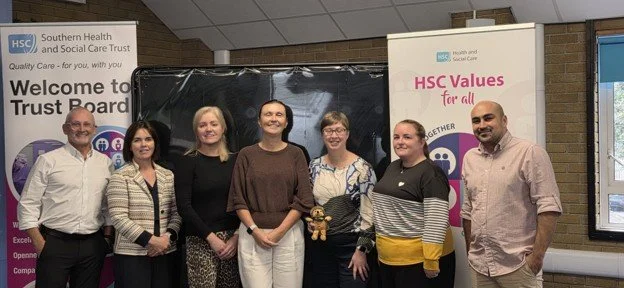
Stevie & Roberto pictured here with Roisin McKenna and Roisin McNulty, Pharmacy, Rachelle Moore, Research Manager, Denise McFarland, Nursing and Mairead McAreavey, Research Administrator, Southern Health and Social Care Trust
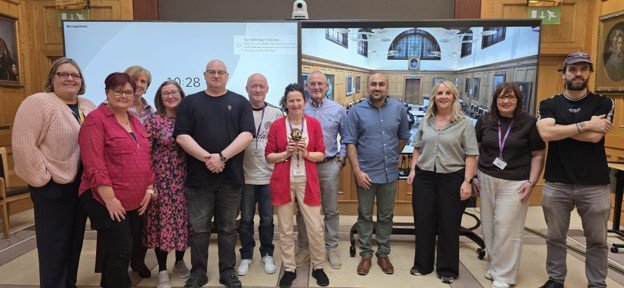
Stevie & Roberto pictured with Julie Hamilton and Carolyn Hewit, Research Finance, Fionnuala White and Chris Wright, Respiratory Research, Jo MacAllistar, Cancer Trials, Dermot Ryder, Angela Toner, Michelle, Roisin, Research Facilitator CRF and Andrew Sloane, Belfast Health and Social Care Trust
From EDGE user to EDGE team: Roberto Aguiar

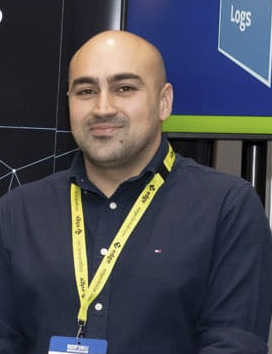
Roberto Aguiar, EDGE Technical Business Support Manager

Before joining EDGE, I worked for 2 years as a Clinical Trials Administrator within the Trials Pharmacy at University Hospitals Southampton NHS Foundation Trust.

It was a varied role that gave me valuable experience across a wide range of research activities and processes, providing insight into the work that goes on behind the scenes to support clinical trials.

A key part of my role was managing the day-to-day operations of the studies assigned to me, working closely with pharmacy technicians and pharmacists to ensure that research activities ran smoothly. This included managing Investigational Medicinal Products (IMPs), from ordering and processing deliveries to responding to queries relating to stock levels, patient accountability and temperature excursions. Maintaining accurate records and ensuring that IMPs were managed appropriately was an important part of supporting patient safety and compliance with study requirements.

My responsibilities also extended to the set-up and ongoing management of clinical trials. I supported the creation of pharmacy folders, updated systems with study data and helped ensure that the necessary documentation and processes were in place before a study began. I also scheduled monitoring visits with study sponsors and Contract Research Organisations (CROs), following up on any queries raised during these visits.

Whilst working in Clinical Trials Pharmacy, I was responsible for finance related tasks such as preparing pharmacy invoice pro formas and helping with financial queries relating to invoices sent to sponsors and CROs. My job was also very clinical-based. I coordinated participant treatments between the Oncology pharmacy and research nurses. This involved ensuring that IV medication was delivered at the scheduled time, helping to support the smooth running of treatment schedules and the wider patient journey. I was also responsible for organising IMP deliveries to research nurses or directly to patients' homes, where required. These activities relied on careful coordination and communication between multiple teams to ensure that medication reached the right place at the right time.

My responsibilities continued through to the end of a study, where I managed the close-down process. This involved checking that all documentation had been signed off, working with sponsors to resolve outstanding queries, reviewing finances and ensuring that all applicable costs had been invoiced.

During my time within this role, I was of course introduced to EDGE. In particular I used it for tracking the setup of studies and other processes and datapoints of a studies lifecycle. EDGE was the tool used for tracking and recording of the pharmacy costs and we also used it a lot of the time to confirm the participant details when dispensing clinical trial medication as well as when dealing with the IMP returns.

Working as a Clinical Trials Administrator gave me a broad understanding of the processes involved in delivering clinical research within an NHS pharmacy and helped me take my next step in 2019. This is when I joined EDGE as a Knowledge Officer where I managed  client accounts, created new functionality requests based on user feedback and was responsible for the CPMS integration. Then in around 2023 I moved to the Product Team where I started my current role as Technical Business Support Manager. Now I oversee the product backlog (tickets used to create new functions to the system), support EDGE integrations with other systems, support the data implementation of new organisations and maintain the responsibility for the CPMS integration.

I feel my past experience working in research has given me first-hand knowledge of research processes, the challenges faced by NHS teams and the importance of developing solutions like EDGE that support the people using them every day.

Welcome to the EDGE Community, East Cheshire NHS Trust

Next up, we are thrilled to welcome East Cheshire NHS Trust to the growing EDGE Community!

The NHS is always moving to more digital ways of working and East Cheshire NHS Trust are embracing exactly that by its move to EDGE for research management.

By bringing key processes, information and reporting into one platform, EDGE is helping them to work smarter and more effectively.  

We recently spoke to Hannah Hunt, Research Governance Facilitator (R&D) from the Trust who shared they are already utilising a range of EDGE features, despite only implementing the system in July earlier this year.

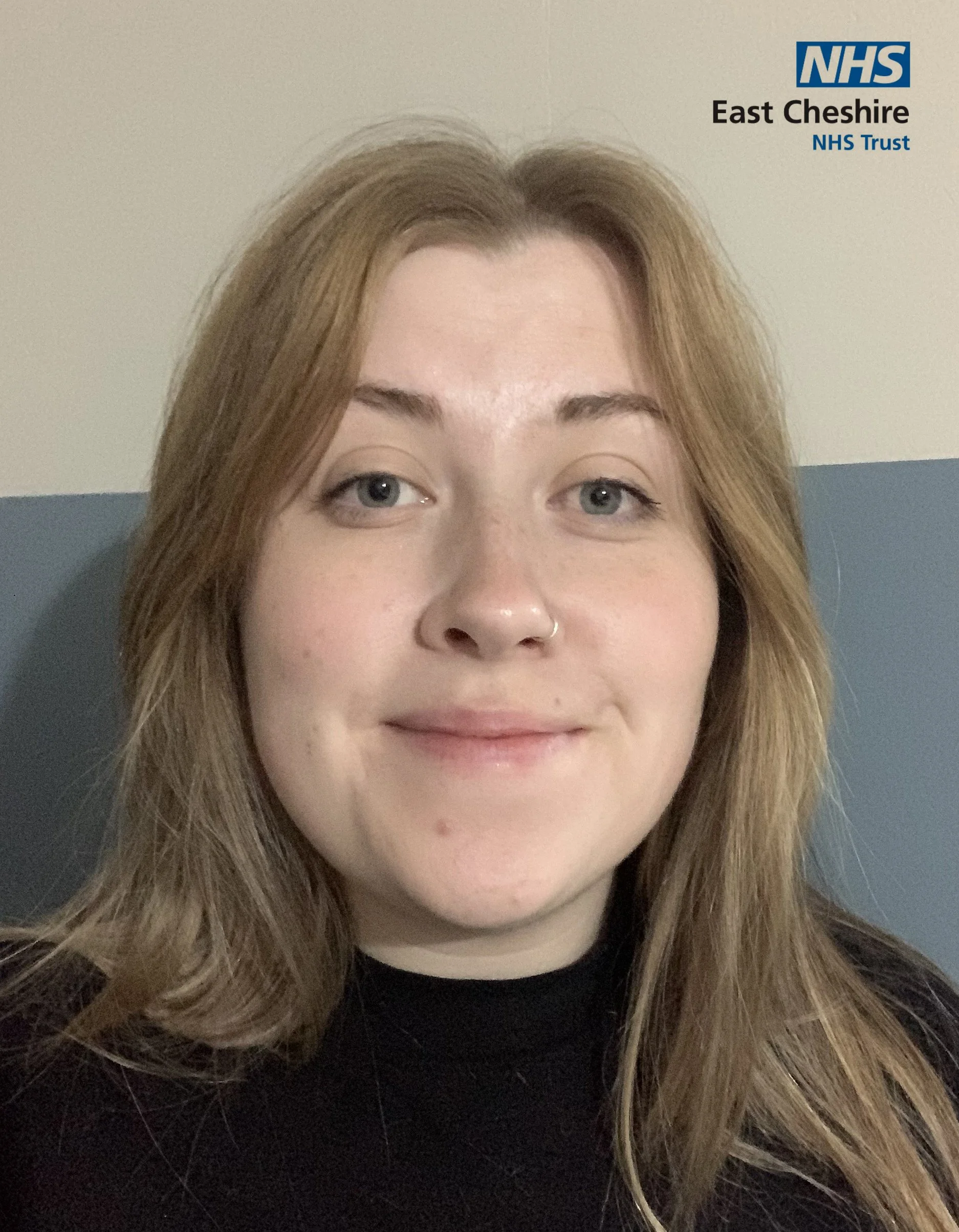
Hannah Hunt, Research Governance Facilitator (R&D), East Cheshire NHS Trust

Supporting finance management and invoice tracking

EDGE Finance is a key area Hannah highlighted to us as bringing real benefits:

“I have found the finance sections in EDGE helpful for keeping track of invoices and identifying any missed payments.”

By supporting financial tracking within EDGE, the system provides a centralised way for teams to keep track of important financial information and maintain greater oversight of payment activity.

A user-friendly experience for Administrators

Alongside its financial capabilities, the Trust also emphasised the ease of navigating EDGE:

“Our admin staff like the EDGE UI and find it is easier to navigate around compared to other systems we have used in the past.”

For all staff, having a system that is straightforward to use can help support day-to-day research management activities. A user-friendly interface can help teams access the information they need and work more confidently within the system.

Looking ahead: Workflows and Reporting

East Cheshire NHS Trust is also looking to expand how it uses EDGE, with a particular interest in study set-up workflows and the reporting functionality.

These areas could support the Trust in developing more structured processes for study initiation, while using EDGE reports to contribute to quality and performance monitoring. Hannah shared:

“I am looking forward to utilising the workflows on EDGE particularly the study set up workflows and using the EDGE report function for our quality and performance reporting.”

By exploring these additional capabilities, East Cheshire NHS Trust is continuing to consider how EDGE can support its evolving research management requirements.

Supporting the future of research management

From finance tracking and user experience to study set-up workflows and performance reporting, East Cheshire NHS Trust's experience highlights the range of ways EDGE can support research teams.

As the Trust continues to explore the platform's functionality, its focus on practical improvements and future development demonstrates the value of digital tools in supporting efficient, connected research management.

Stevie Barre, EDGE Programme Manager and East Cheshire’s Client Manager, had the following to say following their implementation:

“A special thank you goes to Natalie, Rachel and Hannah for all their support throughout the implementation. Natalie worked closely with us throughout the process, particularly with the data mapping, organising the training sessions and helping to keep everything on track. Rachel and Hannah also provided valuable support and helped make the process as straightforward as possible. We really appreciate the time and effort they all put into getting EDGE up and running and look forward to continuing to work with the team as they get more familiar with the system.”

We are delighted to have East Cheshire NHS Trust on board with EDGE and look forward to continuing working with them and supporting them along their EDGE journey. Welcome on board!

Feel inspired: UHS host dedicated EDGE day to strengthen research management

Mikayala King, Research Governance and QA Manager, UHS

Showcasing University Hospitals Southampton NHS Trust for outstanding efforts in strengthening their use of EDGE

For more than 20 years, University Hospitals Southampton NHS Foundation Trust (UHS) has relied on EDGE to support the management of its research portfolio. Today, the system is firmly embedded within the organisation’s research and development processes, providing a central source of information throughout the research lifecycle.

With the introduction of new Key Performance Indicators (KPIs) from the Department of Health and Social Care, designed to measure research set-up times and delivery of research, the UHS R&D team recognised an opportunity to review how they could make the most effective use of all tools available to them.

To explore this, the team held a dedicated focus event around EDGE bringing together staff from across the R&D infrastructure.

Making the most of EDGE

Mikayala King, Research Governance and QA Manager at UHS, explained the thinking behind the event:

“We wanted to ensure that we were using all of the tools available to us to help manage expectations, to be able to react swiftly to changing situations with studies, and to look for trends to enable us to be more efficient.”

For UHS, EDGE is central to achieving this. As Mikayala explains:

“The main tool at our fingertips is EDGE. It is our source of truth and our contemporaneous record of everything that occurs prior to study set-up, including the EOI process, feasibility, and whilst the study is running, amendments and invoicing for activity.”

With EDGE playing such an important role, the team identified the need to ensure that everyone was confident in using the system and understood how information was captured, stored, retrieved, and subsequently reported.

A day focused on data, processes and collaboration

The full-day event provided an opportunity for different staff groups across the R&D department to refresh their knowledge of EDGE and explore how the system is being used across UHS.

Key areas covered during the day included:

  • How UHS uses EDGE throughout the research lifecycle.

  • The importance of data integrity.

  • The value of timely and complete data entry.

  • Where information is stored within EDGE and how it can be retrieved.

  • How EDGE data is used and reported across the wider R&D department.

  • Opportunities to improve workflows and make better use of existing functionality.

  • Ideas for additional functionality that could provide greater insight into studies and support more efficient working.

The event was not simply about refreshing existing knowledge. It also created a forum for staff to share their experiences, identify challenges, and suggest ways that EDGE could be used more effectively.

Turning discussion into action

The event has already led to tangible improvements within UHS.

Following the discussions, changes have been made to forms and workflows, while data input has improved. The team is also planning a further event focused specifically on finance, recognising the importance of ensuring that financial information is managed as effectively as other areas of the research portfolio.

The team also identified areas where improvements and clarification would be valuable at a wider level. This includes suggestions to the NIHR around the handling and reporting of sub-studies and platform trials, as well as questions about where the data used to populate EDGE from CPMS is sourced.

Learning through practical activities

To reinforce the importance of good data management, the team took an engaging and creative approach during the day.

The importance of timely data entry was demonstrated using Rubik’s Cubes, while data integrity was explored through doctored jigsaw puzzles. The team also used doctored origami instructions to highlight the importance of clear and accurate instructions.

These practical exercises helped turn what can sometimes feel like abstract concepts into memorable, hands-on examples of how small errors, delays, or inconsistencies can affect the bigger picture.

Looking ahead: The next 20 years

For UHS, the focus event demonstrated the value of stepping back from day-to-day processes to review how systems, data, and people work together.

The team plans to continue pushing EDGE as far as possible, while working collaboratively with the EDGE team to explore opportunities for further development and improvement.

UHS plans to ensure that EDGE continues to be the trusted source of truth for research studies and that it remains a fundamental part of research management for many years to come.

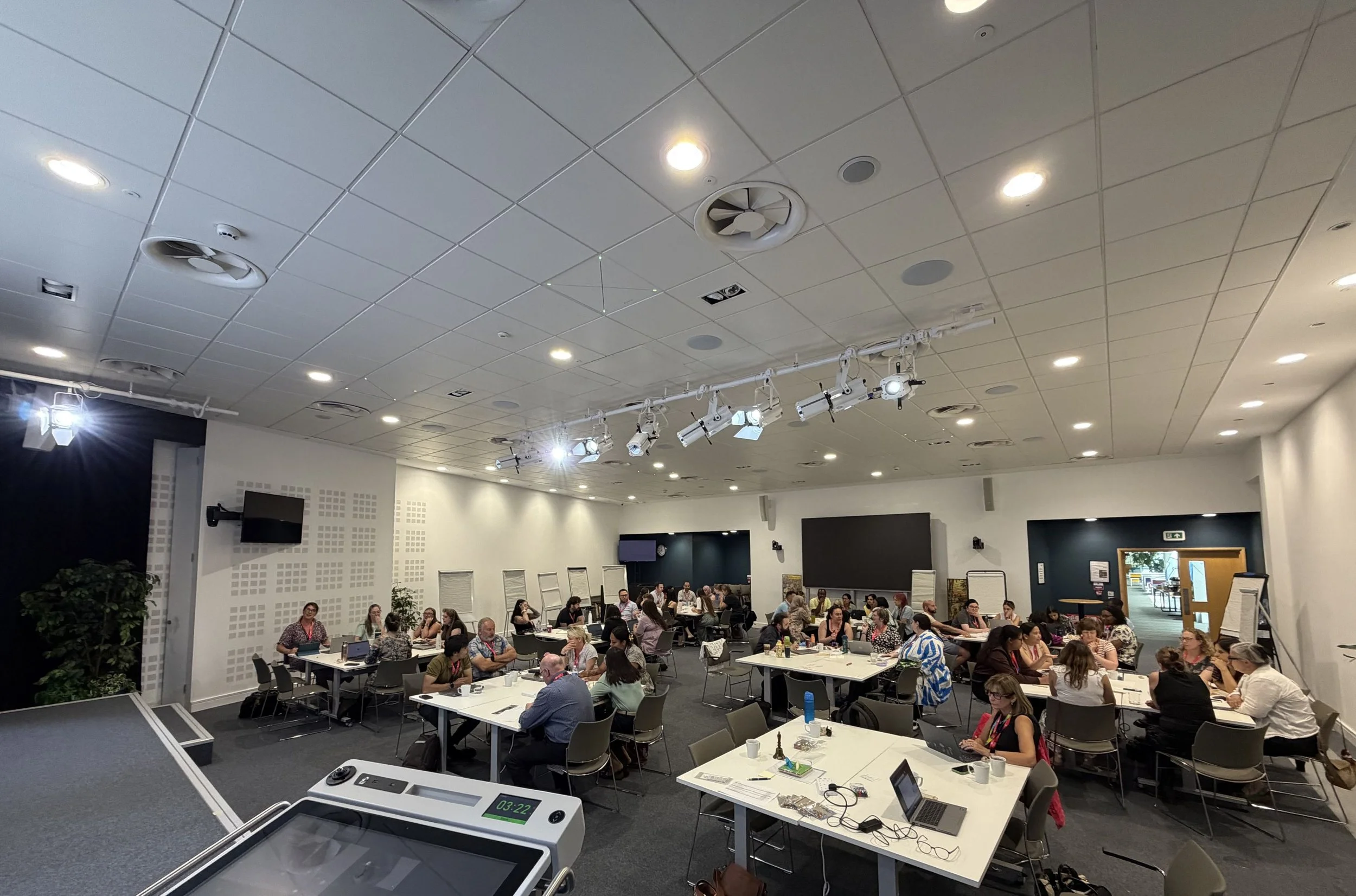
UHS attendees of the EDGE day

From EDGE user to EDGE team: Beth Mathis

CIRU & EDGE Marketing Manager, Beth Mathis

Prior to my current position at EDGE, I worked in a few different research-based roles where I was first introduced to EDGE and, in fact, became a user of the system myself.

My research journey began in 2012 when I joined University Hospitals Southampton NHS Foundation Trust as a Pharmacy Support Worker in Clinical Trials. My main tasks included dispensing clinical trial medication, setting up trial folders and receipting trial drugs. I soon progressed to Senior Pharmacy Support Worker and later to Clinical Trials Coordinator, where I worked on mostly Oncology studies.

It was during these roles that I was introduced to EDGE, and it quickly became a helpful tool in my day-to-day work. I used it to help identify trial patients when prescriptions came into the pharmacy. It was also useful for gathering additional information that a Pharmacist might need, particularly when working in the main Oncology pharmacy, where clinical trials was just a small part of the medication dispensed in the dispensary and produced in the clean rooms.

My roles within Pharmacy involved a lot of paperwork including the upkeep of drug accountability logs, staff logs, drug destruction logs, and delegation logs. One thing I clearly remember was the amount of effort it could take to get, in particular, a delegation log completed. I was often hunting down a nurse or Principal Investigator (PI) for their paper signature, or trying to track down the paper log that had been left in a tray somewhere waiting to be returned. This certainly gave me an insight into the challenges and hassle that come with maintaining paper documentation for clinical trials.

After nearly three years in Pharmacy, I moved up to the Trust’s R&D department. This meant a small pay rise, but also a significant increase in the number of steps I did each day, walking all the way up to E Level! My role as a Research Assistant was heavily administrative and meant I worked with EDGE much more regularly. My main responsibilities included adding studies to the system and transferring information from both electronic and paper documentation.

I stayed within R&D for just over six months before discovering a vacancy within the EDGE team, which was based at UHS. I applied, had an interview, and soon became a Knowledge Support Analyst for the EDGE team. In this role, I supported the Knowledge Officers with implementations and support queries, while also beginning to work on new functionality for EDGE.

I was assigned specifications for new patient SAE functionality and, yes, you guessed it, a new electronic delegation log! I worked alongside our dedicated development team and other Knowledge team members to help design and build these new features. It was a great opportunity to take my experience as an EDGE user and use it to help shape the system itself.

A couple of years later, I moved into a brand-new role in Marketing and Communications, progressing to my current role as CIRU Marketing Manager. Today, I contribute to the direction of marketing and communications for our department, build on our user communication strategy and develop a number of EDGE Community channels. These channels help our user base enhance their EDGE skills, share knowledge, and connect members together to find better ways of working.

I do believe that having both the user experience and the ‘on-the-ground’ experience of working in clinical trials has really helped me in my role at EDGE. It has given me a valuable perspective when it comes to system development and communicating with our community.

Most importantly, it has helped me think like a user and understand the importance of putting the user at the forefront of what we do.