
Refreshed, Inspired, and Connected: Reflecting on RDF26 in Birmingham

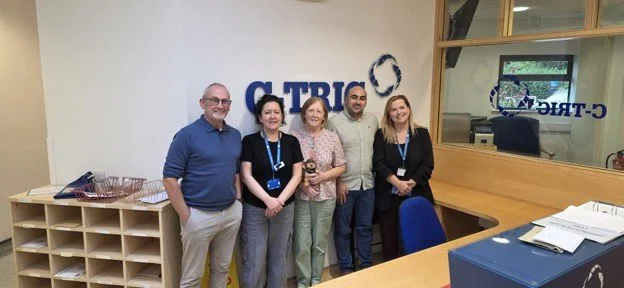
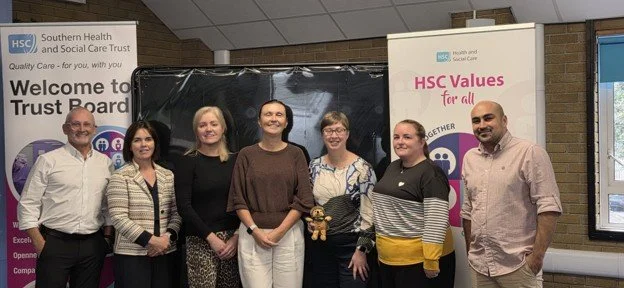
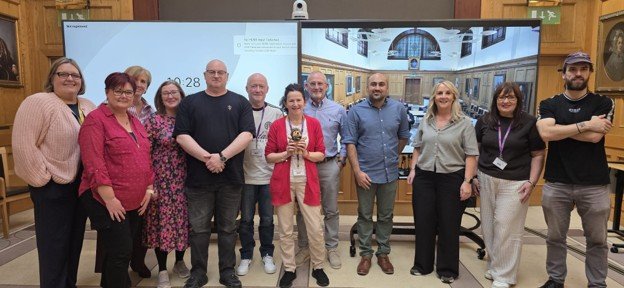
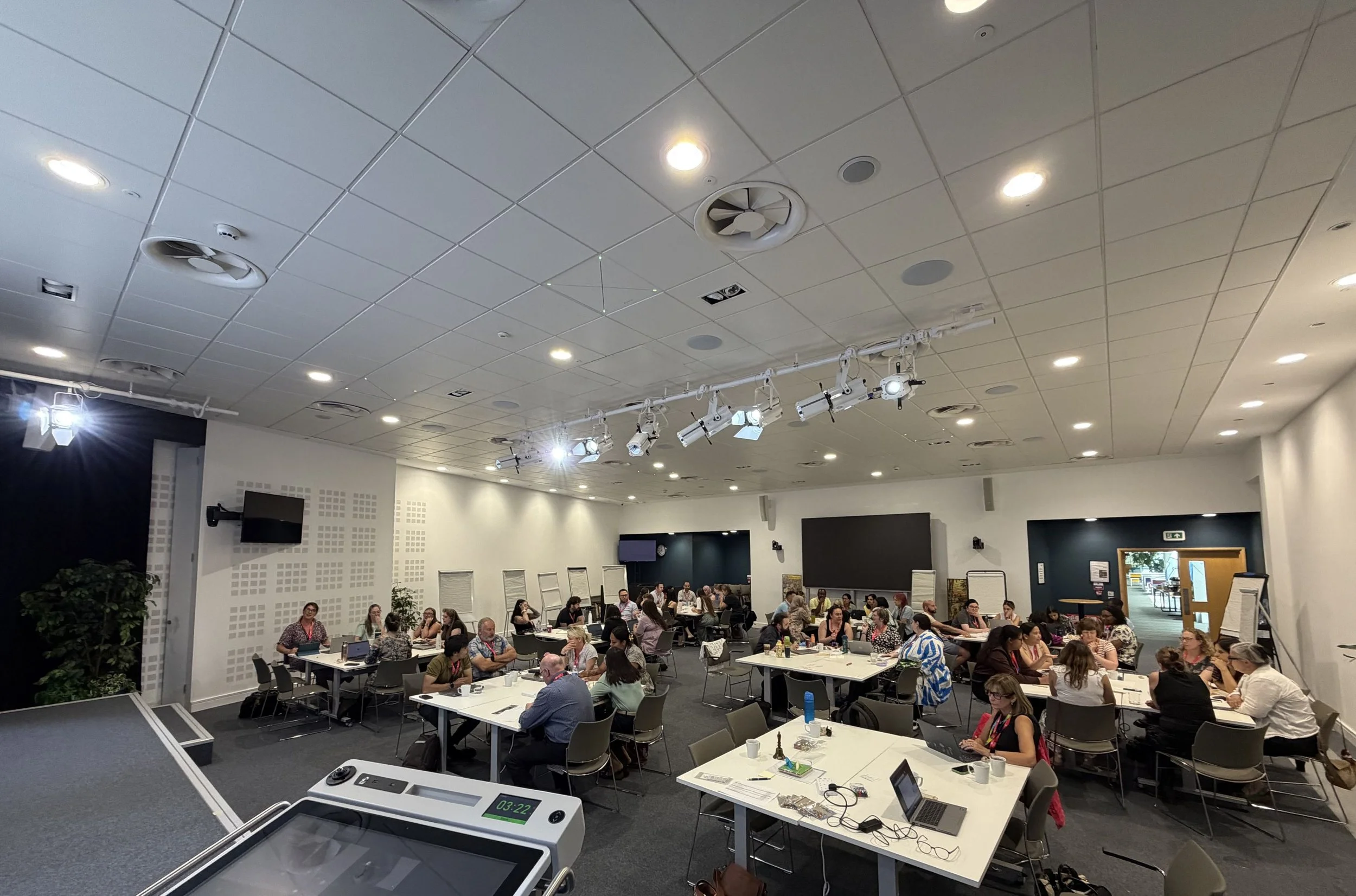
Two weeks ago, the EDGE team headed to Birmingham to exhibit at the annual Research and Development Forum (RDF26). It was an incredible few days of networking, learning, and celebrating innovation. From busy catch-ups at Stand C9 over coffee to inspiring presentations, the energy of the health and care research community was unmatched.

For Jen, Ben, Stevie, Andy, and Roberto, the highlights were the face-to-face conversations. It was wonderful to reconnect with familiar faces and forge new connections. Hearing about the recent milestones and future research goals of the EDGE community reminded us why digital innovation matters. The discussions around streamlining clinical trials showed a collective drive to push the boundaries of healthcare research.

The event also provided a platform to celebrate the brilliant ways our community leverages EDGE to solve real-world R&D challenges. Finance and efficiency emerged as major themes throughout the sessions.

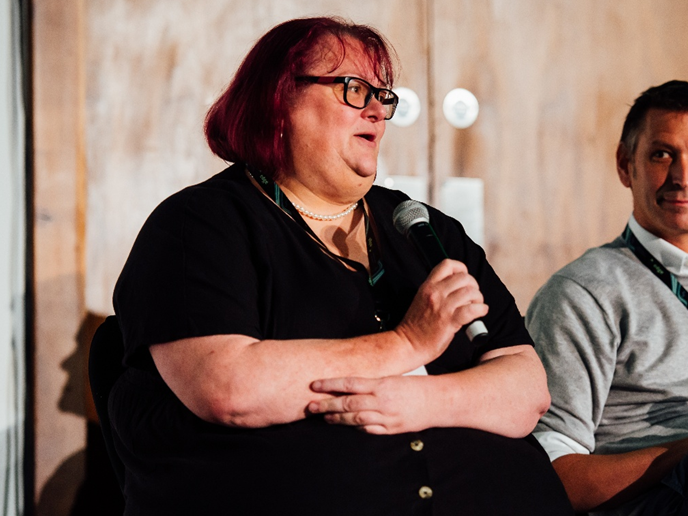
During the lunchtime presentations, Thomas Jenkins and Nick Allison from the Royal Free London NHS Foundation Trust took to the stage. They demonstrated how they are automating invoice splitting and error-checking for commercial income using the iCT tool alongside EDGE. Their work is a brilliant example of how smart data usage can slash administrative burdens, representing a massive win for NHS financial accuracy and efficiency.

The celebrations continued in the poster exhibition. We were absolutely chuffed to see Donna Foster, Research Governance and Data Manager at the Princess Alexandra Hospital NHS Trust (PAHT), awarded a prestigious Top 10 poster!

Her presentation, "Driving growth through EDGE finance at PAHT," perfectly illustrated the power of moving away from fragmented, spreadsheet-based financial tracking. By centralising their processes using EDGE and the Interactive Cost Template (iCT), Donna’s team achieved phenomenal results:

  • 170% Revenue Growth: Generated research income skyrocketed between FY 2022/23 and FY 2025/26.

  • Vast Financial Visibility: EDGE flagged over £24,000 in due funds on just one initial commercial trial, compared to the £6,000 originally advised by the sponsor.

  • Proactive Invoicing: PAHT shifted from reactive tracking to proactive, deadline-driven invoicing to ensure full cost recovery.

Donna’s recognition is a testament to the hard work of the PAHT team, proving that reducing administrative tasks allows for maximum reinvestment into clinical research.

Looking Ahead

We left Birmingham feeling incredibly inspired by the passion of the R&D community. Thank you to everyone who stopped by Stand C9, shared their expertise, or cheered on their colleagues. We are already looking forward to helping you bring your future research visions to life.

Northern Care Alliance NHS Foundation Trust joins EDGE

The Greater Manchester clinical research landscape has just taken an exciting step forward. We are thrilled to announce that Northern Care Alliance NHS Foundation Trust (NCA) has officially deployed the EDGE clinical research management system across its vast healthcare footprint.

By adopting EDGE, NCA is empowering its workforce with centralised and real-time data visibility, which will allow research teams to cut through administrative red tape and dedicate more time to frontline patient care.

Immediate Impact and Early Impressions

While software migrations can often be daunting, the NCA team has hit the ground running. The system is already proving its value on the ground after only a few weeks into live operations. Fiona Bray, Research and Innovation Manager at NCA, highlighted how quickly the team has adapted.

“Although we’ve only been using EDGE for a few weeks, we’re finding it intuitive and easy to use. The KnowledgeBase has been very helpful, the forms functionality is invaluable for capturing study information, and reporting is quick and straightforward.”

This initial rollout is just the foundation of a broader digital strategy. Moving forward, the Trust plans to unlock the full depth of EDGE's capabilities to break down traditional silos between administrative and clinical staff.

“We’re looking forward to implementing the finance system and using EDGE for document sharing across R&I, research teams, and support departments,” Fiona explained.

Celebrating a Seamless Migration

Moving high volumes of historical study data requires seamless teamwork and meticulous planning. The successful launch was made possible by the dedicated collaboration between NCA’s project leaders and our own implementation specialists.

 “Thank you to Stevie, Nicky, and Roberto, whose support throughout the implementation process made the transition from our old LPMS smooth and well managed, ensuring that large data transfer was accurate and complete.”

NCA’s arrival injects fantastic new energy into our nationwide network of healthcare professionals. Every new Trust that joins our ecosystem brings unique insights that enrich the wider community, driving the collective standard of UK clinical trial delivery upward.

We are incredibly proud to partner with Northern Care Alliance for this next chapter in their research journey, and we look forward to supporting their continued growth.

Welcome to the community, Northern Care Alliance!

Welcoming Nottingham University Hospitals NHS Trust to EDGE

We are delighted to extend a very warm welcome to Nottingham University Hospitals NHS Trust (NUH), who have officially joined the EDGE community. Nottingham are one of the largest and busiest acute Trusts in the UK, and their decision to adopt the EDGE clinical research management system marks a significant milestone for both their team and our wider network.

Their focus on streamlining research workflows and improving data oversight further strengthens the spirit of collaboration that defines our community. By integrating EDGE into their daily operations, NUH aims to centralise their research data and provide staff with real-time insights that reduce administrative burdens and allow for a more clinical focus on patient care.

Nottingham’s arrival follows a steady period of growth for the EDGE programme. They join several other high-profile Trusts that have recently come on board to modernise their research infrastructure. This continued momentum highlights a collective commitment across the UK to using data-driven insights to enhance the management of clinical trials. As the landscape of healthcare research becomes increasingly complex, the need for a unified, transparent platform has never been more vital.

The EDGE team is looking forward to supporting the Nottingham team as they embed the system into their existing workflows. We are excited to see how they leverage these new efficiencies to drive their research operations forward, ultimately fostering an environment where innovation can thrive.

By joining the EDGE family, Nottingham University Hospitals NHS Trust are joining a collaborative ecosystem of research professionals dedicated to sharing best practices and improving the delivery of clinical research nationwide.

Welcome aboard, Nottingham.

Unlocking Research Income with EDGE

Donna Foster – Clinical Trials Governance & Data Manager, Research and Development, The Princess Alexandra Hospital NHS Trust, UK

At The Princess Alexandra Hospital NHS Trust, research activity continues to grow across a broad range of specialties. The Trust currently supports around 75 active studies across three sites, including commercial and non-commercial trials, portfolio and non-portfolio studies, and academic research. Approximately 15% of these studies are commercial, a proportion expected to rise as the Trust expands its commercial research activity. Ensuring that study activity is accurately tracked and supported by robust financial processes is therefore essential, especially with research teams working across multiple departments and sites,

When Donna Foster joined the Research, Development and Innovation (RD&I) department in November 2023, she quickly identified that financial tracking within research studies was an area that needed attention. At the time, invoices were typically raised only when sponsors requested them, and there was no central system to record study activity or verify whether all billable work had been captured. “When I arrived, finance wasn’t prioritised,” Donna said. “Invoices were often only raised when sponsors asked for them, which meant there was no clear way of checking whether everything we had done had actually been claimed for.”

Although staff were aware that EDGE had finance capabilities, the tools had never been implemented due to uncertainty around how to configure them. Donna was determined to change this and contacted the EDGE team for support. Within days, the team held their first Teams call with Stevie and Mat to use the commercial and non-commercial import tools. They were up and running at the Trust within a week.

The impact was immediate. The first study Donna applied the system to was a commercial trial where the sponsor had requested a final invoice of £6,000. By retrospectively recording historical activity within EDGE, she was able to identify additional billable work that had not previously been captured. The final invoice issued exceeded £24,000 after reviewing the records with the sponsor. “My achievements regarding implementing the EDGE finance tools was recognised in the Trust’s proudest moments, and highlighted the money that would have been ultimately lost if these tools had not been introduced.”

Today, the RD&I department uses both the commercial and non-commercial finance import tools within EDGE to track study-related income. Research staff across the department – including research nurses, clinical trial practitioners, pharmacy teams, and data teams – record activities such as study visits, monitoring visits, participant travel expenses, and consumable checks directly in the system. While it initially took some time for clinical teams to adjust to recording financial activity alongside research tasks, the process has now become embedded in day-to-day workflows.

The results have been significant. Donna said: “Within the first three months of implementing the finance tools in EDGE, the department recovered more than £100,000 in previously unclaimed income from historic studies.” This ensured the department finished the financial year in a positive position and created a stronger financial foundation moving forward. During the 2024/25 financial year, the RD&I department recorded the highest research income in its history – a milestone supported by the ability to track study activity and associated income in real time.

Beyond recovering lost revenue, the system has also helped the team improve efficiency. Because research activity is now recorded at the time it occurs, invoices can be prepared quickly and with confidence that all eligible costs are included. Management and summary reporting tools within EDGE also provide insights into current and projected income, helping the department make informed decisions about future growth and team expansion.

Donna has since shared her experience with other organisations through EDGE events and professional networks, encouraging other Trusts to adopt the finance tools to strengthen their own cost recovery processes. As research activity continues to expand, the integration of financial tracking within EDGE is helping the Trust build a more sustainable and transparent research environment. “I cannot express enough what a difference the finance tools have made. I would recommend them to all Trusts.”

Smarter Delegation with EDGE

Dr Mikayala King – R&D Governance, QA and Sponsorship Manager, University Hospital Southampton NHS Foundation Trust, UK

At University Hospital Southampton (UHS), delegation of duties is a vital part of research delivery. It ensures that specific tasks are formally assigned by the Principal Investigator (PI) or Chief Investigator (CI) to appropriately trained members of the research team. While duties can be delegated, the PI or CI retains overall responsibility for the study. This makes accurate and up-to-date records essential.

Historically, this process was managed on paper. Delegation logs often ran to several pages of names, trial roles, duties, signatures, and dates. Updating them meant physically tracking down team members for signatures – a process that was both time-consuming and prone to inconsistencies or missing information. As Dr Mikayala King recalls, “Before EDGE, signing off a delegation log meant a lot of paperwork – and a lot of time.”

The solution came in the form of the EDGE Delegation Log, which was developed to replace cumbersome paper records with a clear, concise, and regulation-compliant electronic system. The tool allows authorised staff to update records remotely, store all key details in one place, and keep a complete audit history. Information such as staff names, roles, approvals, start and end dates, responsibilities, and signatures can be accessed and updated online with the added benefit of downloading reports in familiar formats like Excel.

UHS rolled out the EDGE Delegation Log across all sponsored studies. The implementation involved engaging nursing teams and PIs/CIs in discussions, running workshops, and even providing one-to-one support to update signatures directly. This practical, hands-on approach ensured that staff could start using the system quickly and confidently. The Delegation Log is now embedded into standard EDGE training for all new users.

“It’s easy to understand, adaptable to our needs, and keeps everything in one place,” says Dr King. “We’ve reduced both the time to sign-off and the number of incidents related to delegation logs, while making the whole process more efficient for our teams.” Looking ahead, UHS sees the Delegation Log as an important step toward building a fully integrated, paperless research environment, one that supports compliance, transparency, and smoother collaboration across the research community.

The impact has been significant. The time required to get delegation logs signed off has been reduced, incident reports related to delegation logs have dropped, and unnecessary printing has been cut back, which has supported the wider shift to digital records. The system has also improved cross-site collaboration, making it easier to share accurate, up-to-date information with partners such as the CDRC. Other sponsors are now beginning to adopt the EDGE Delegation Log at the feasibility stage, which has extended its benefits beyond UHS.

Equality, Diversity, and Inclusion (EDI) - New NHS project using EDGE

After going live on the 22nd of September this year, our team are thrilled to announce the next milestone in the Equality, Diversity, and Inclusion (EDI) in Health and Care Research Pilot has been achieved.

On the 5th of November the first extract of EDI pilot data was extracted from EDGE for participating organisations and sent to NHS England for review. Further extracts will be taken on a monthly basis for any organisation choosing to opt into the EDI pilot via EDGE.

The EDI project support understanding of inclusion, representation, and participation and identifying variation in participation in health and care research across the geography of England. In the long term it is intended that analysis of this data will directly improve equality, diversity, and inclusion in such research and ultimately improve access to good quality, evidence-based health and care.

NHS England will provide results of its analysis in the form of reports and dashboards, which will inform the Department of Health and Social Care’s (DHSC) strategy and policy decisions with the support of the National Institute for Health and Care Research (NIHR), aligned with the “Best Research for Best Health: The Next Chapter” and as set out in the NIHR Research Inclusion Strategy 2022-2027

It's not too late to include your organisation in the EDI pilot. Further details about how to opt in can be found on the links below.

Questions about the Equality, Diversity and Inclusion (EDI) in Health and Care Research pilot