
Welcome to the EDGE Community, Tameside and Glossop Integrated Care NHS Foundation Trust

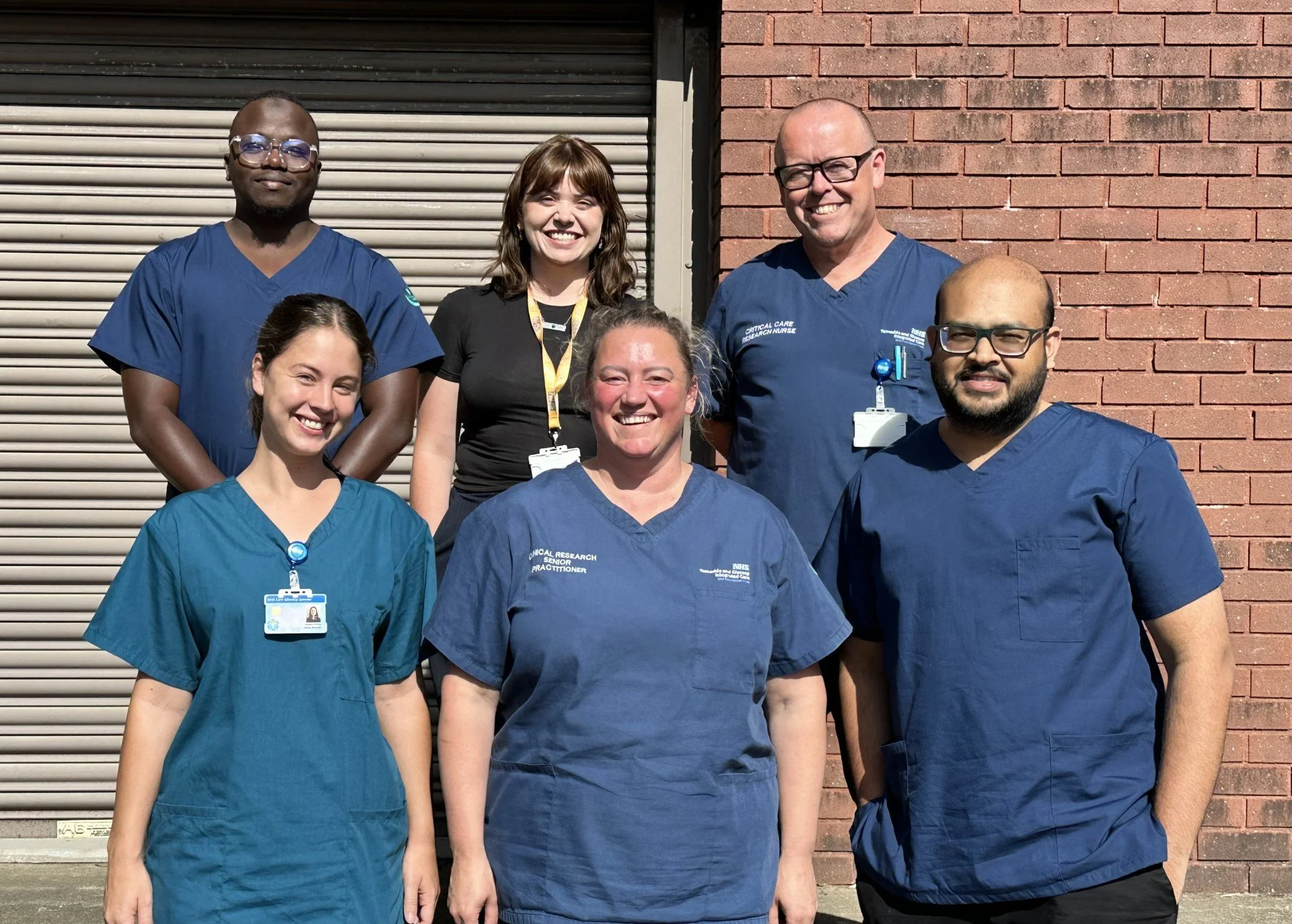
Tameside and Glossop Integrated Care NHS Foundation Trust’s R&D Team

We are thrilled to welcome Tameside and Glossop Integrated Care NHS Foundation Trust to the growing EDGE Community!

As research continues to play an increasingly important role in improving patient care and developing new treatments and approaches, having robust systems in place to support research delivery is essential. By adopting EDGE, the R&D department at Tameside and Glossop Integrated Care NHS Foundation Trust is taking an important step towards strengthening its research infrastructure and enhancing the way research is managed and delivered across its services.

EDGE will provide the Trust with a central platform to support effective research governance and management, helping teams to streamline processes, monitor performance, and make informed decisions about resources. By bringing greater visibility and structure to research activity, EDGE will improve communication amongst teams and efficiency.

The implementation of EDGE represents more than simply introducing a new system. It is an opportunity to build on existing processes, support working together across research services, and establish a strong foundation for the Trust's future research ambitions.

Helping deliver high-quality research outcomes

We caught up with Jean Kinder, Senior Clinical Research Practitioner, to hear about the department's experience following the implementation of EDGE:

“Our R&D department fully endorses the use of EDGE as a key component of our research infrastructure. We believe the platform will support the effective governance, management, and delivery of clinical research, while enhancing transparency, performance monitoring, and resource planning.

Our department is committed to supporting its adoption across research services to help deliver high-quality research outcomes for patients, staff, and partners. We look forward to the benefits it will bring and thank EDGE for their expert guidance and support throughout our implementation journey.”

Making the most out of EDGE

Jean's comments highlight the Trust's commitment to making the most of EDGE and embedding it across its research services. The EDGE platform will support the R&D team as it continues to deliver high-quality research and contributes to better outcomes for patients and the wider research community.

Stevie Barre, EDGE Client Manager for Tameside shared the following:

“It is a pleasure to welcome Tameside and Glossop Integrated Care NHS Foundation Trust to the EDGE community. Their adoption of EDGE is an important step in supporting their research teams and improving the way research is managed across the organisation. A special thank you goes to Jean and Rebecca, who were instrumental throughout the implementation process.”

We are incredibly pleased to have Tameside and Glossop Integrated Care NHS Foundation Trust join the EDGE Community and look forward to supporting the team as they continue on their EDGE journey. Welcome on board!


The new ISO 9001 Certification

Professor James Batchelor, CIRU Director

Building trust through Quality and Information Security Certifications

Here at the Clinical Informatics Research Unit protecting patient information and delivering high-quality services are fundamental to maintaining stakeholder trust. These principles underpin everything we do for the EDGE Programme. That is why we are proud to announce that we are certified with two internationally recognised standards: ISO 27001 for Information Security Management Systems (ISMS), achieved in May 2025 and ISO 9001 for Quality Management Systems (QMS), obtained in September 2026.

Together, these standards provide robust frameworks for managing information security, protecting sensitive data, and ensuring the consistent delivery of high-quality services and continual improvement across our operations. They provide assurance to NHS organisations, research partners, and collaborators that our processes meet recognised international standards for both information security and quality management.

Achieving and maintaining ISO 27001 and ISO 9001 certification demonstrates our Unit's commitment to safeguarding confidential information, meeting stakeholder expectations, and operating to internationally recognised best-practice standards. Our director Professor James Batchelor had the following words to say about CIRU’s recent success:

“We are excited to announce our continued high-level compliance with ISO 9001 and ISO 27001, demonstrating our additional commitment to providing our clients and stakeholders with assurances of our information security and quality systems management.”

ISO 27001 helps to ensure that confidential and sensitive information is protected throughout its lifecycle. For NHS partners, this offers confidence that data is handled responsibly, with appropriate controls in place to safeguard patient and organisational information while supporting vital research and innovation.

Complementing this, ISO 9001 focuses on quality, consistency, and continuous improvement. It encourages organisations to adopt efficient, well-managed processes that deliver reliable outcomes and respond to the evolving needs of stakeholders. For us this means regularly reviewing and enhancing our ways of working to ensure we continue to provide high-quality support for research, service improvement, and collaboration across the health and care system.

Both certifications strengthen our governance framework and reinforce our commitment to excellence. They help us meet the expectations of NHS organisations and beyond by embedding quality and information security into every aspect of our work, from project delivery and data management to stakeholder engagement and operational performance.

Most importantly, our certifications have been independently assessed and recognised by BSI, providing external validation that CIRU continues to meet the rigorous requirements of both standards. The BSI certifications demonstrate our ongoing commitment to supporting our stakeholders with confidence, integrity, and best practice, enabling research and innovation that ultimately benefits patients and the wider health and care community.

3CTN launches user newsletter

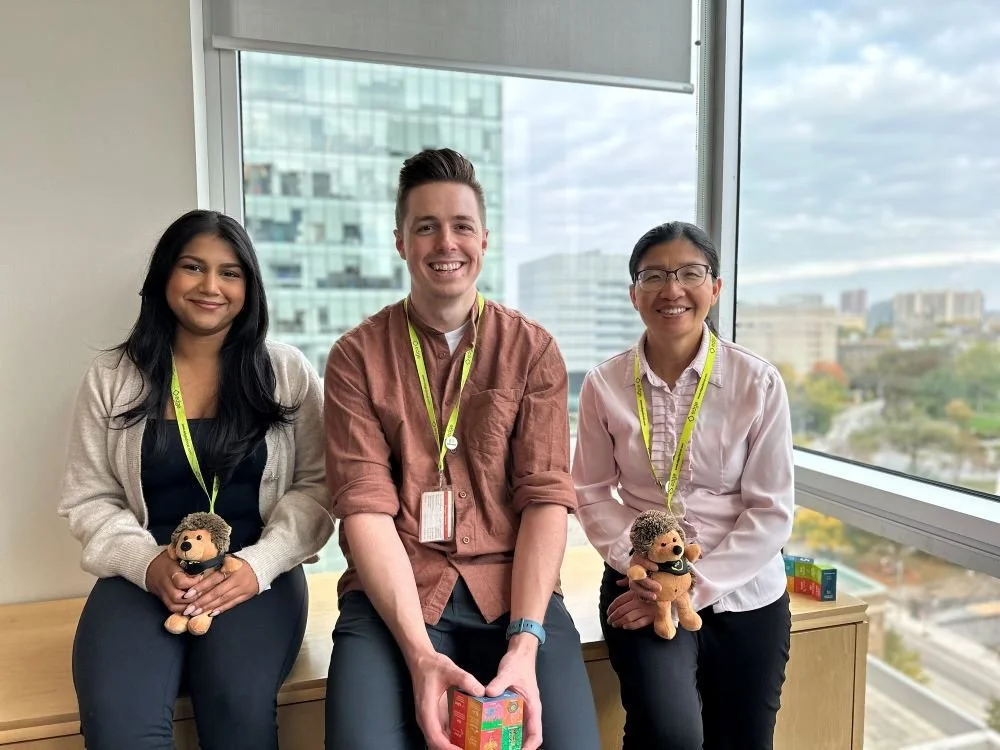
Raisa Chowdhury - Project Lead, James Schoales - Portfolio Data Analyst and Rebecca Xu - Manager, Portfolio & Informatics

Showcasing 3CTN for their efforts in improving EDGE user communication

The Canadian Cancer Clinical Trials Network (3CTN) has recently launched a new communication initiative for its EDGE user community: the EDGE Essentials newsletter.

Published every two months, the newsletter is designed to strengthen communication, showcase EDGE’s features, and increase awareness of its functionality, to optimise usage and encourage greater adoption across Canada. Each edition highlights key features, explains how they can benefit users, and includes a practical Tip of the Month to help users get even more out of EDGE.

The reason behind the initiative:

We asked Lead Administrators Rebecca Xu and James Schoales what the reason was for launching EDGE Essentials. They responded:

“With EDGE releasing updates, we wanted to make sure users were aware of the new functionalities and how they can be used. Additionally, we wanted to increase awareness of already existing functionality to encourage full usage of EDGE.”

How it’s going:

Rebecca and James informed us that their EDGE Essentials newsletter is already proving to be a highly effective engagement channel, achieving strong open rates and expanding  reach well beyond Lead Administrators. EDGE Essentials has driven increased participation across the broader community, with many new users signing up for EDGE drop-in sessions and joining working groups.

With strong aims of increasing awareness of existing functionality, being able to highlight important updates, answer frequently asked questions as well as being able to reach users beyond Lead Administrators, we are incredibly proud of 3CTN’s new venture and wish them every success with it.

Feeling inspired? Take a cue from 3CTN and consider launching a newsletter for your own end users to keep them informed, engaged, and confident in using EDGE. Let us know if you roll this out at your organisation, we would love to hear from you.

EDGE returns to the UKCRF

Stevie Barre & Roberto Aguiar, EDGE

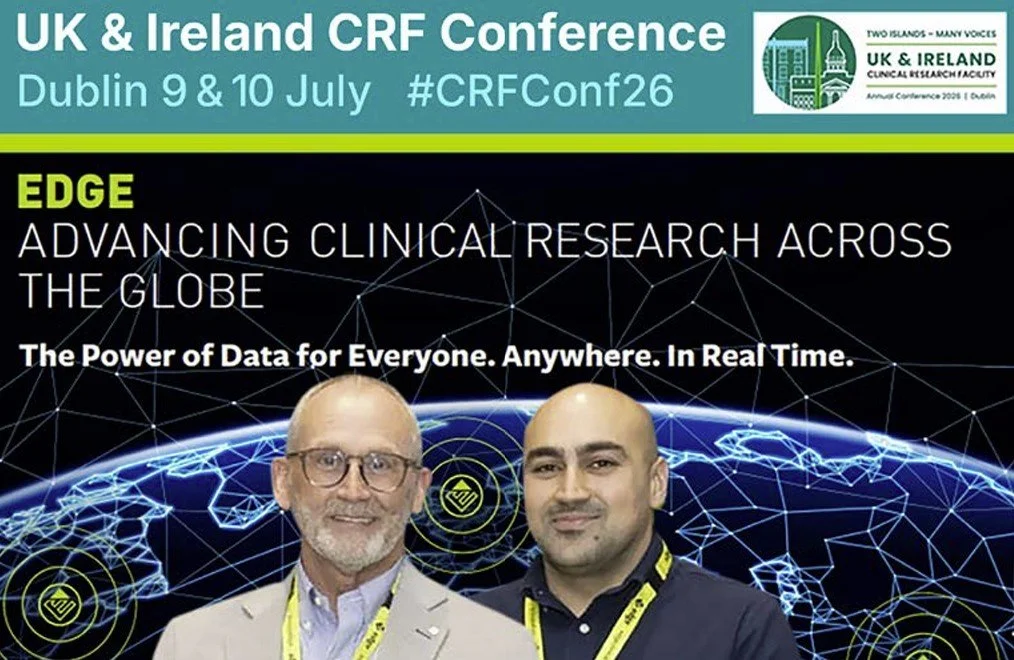
Stevie Barre, Programme Manager, and Roberto Aguiar, Technical Business Support Manager, will be attending the Annual UKCRF Conference at the Business School, Trinity College, Dublin, on 9–10 July.

This year marks Stevie's second UKCRF Conference, and he is looking forward to returning alongside his colleague Roberto to connect with clinical research professionals from across the UK and Ireland. The conference provides a valuable opportunity for the EDGE team to engage directly with the people who use the platform every day, strengthening relationships, sharing knowledge, and gathering insights that help shape the future of EDGE.

Speaking ahead of the event, Stevie highlighted why the conference is such an important date in the calendar:

"The UKCRF Conference enables us to meet with many delivery teams predominantly working clinically who are, in many respects, the real EDGE front line. It gives us the opportunity to hear first-hand about the challenges they face, gather valuable feedback, explore new ideas, and better understand how EDGE can continue to support their work. It's also a fantastic chance for attendees to meet members of the EDGE team, ask questions, share experiences, and for us to strengthen the relationships we have with our clients."

The UKCRF Conference is recognised as one of the leading events for the clinical research community, bringing together professionals from across research delivery, academia, and the NHS to discuss innovation, collaboration, and best practice. For the EDGE team, it is an invaluable opportunity to listen to users, showcase the latest developments, and gain a deeper understanding of the evolving needs of research teams.

If you're attending the conference, be sure to stop by the EDGE stand to meet Stevie and Roberto. Whether you have questions about the platform, would like to discuss your experience with EDGE, or simply want to say hello, they'd be delighted to meet you.

To find out more about the conference, visit the UKCRF website here.

EDGE Development - Nicky Morris, EDGE Product Manager

Nicky Morris, EDGE Product Manager, University of Southampton

How we develop EDGE by Product Manager Nicky Morris

Bringing new features to EDGE

Over the last month, we delivered our second release of the year. This was a significant release with a number of new features and enhancements. I thought this would be a good opportunity to share a little about how we build releases, explain our development process, and highlight how users can get involved.

How we develop EDGE

The EDGE team works using an agile development approach. This means we deliver regular improvements and enhancements through small iterations, focusing on collaboration, continuous feedback and incremental delivery, allowing functionality to grow and evolve over time. We follow a user-centred design approach to the build, involving users throughout the discovery, and design phases to ensure new functionality addresses real-world needs.

Our development backlog is shaped by several sources. Over the last month, we have been working on onboarding new Trusts, implementing recommendations from internal reviews and external penetration testing, and delivering improvements based on user feedback and discussions.

New 'My Saved Searches' functionality 

One recent example is the new 'My Saved Searches' functionality. We are beginning a programme of work focused on helping users stay informed about new studies in EDGE that may be relevant to them. Saved Searches is the first step in that journey, allowing users to save search criteria and receive notifications when new studies matching those criteria are added.

This is a good example of our agile approach to development. Our broader goal is to support users throughout the entire study engagement process - from discovering relevant studies through to recording expressions of interest and assessing feasibility. Rather than delivering everything at once, we are starting with the first step: helping users find studies more effectively. Future developments will build on this foundation.

Help shape the future of EDGE development

To support this process, we are looking at creating a dedicated space within our community forum where the EDGE team and the community can discuss ideas and help shape future development of the EDGE service. We encourage anyone interested in influencing the direction of the platform to get involved. More information will be shared in an upcoming user newsletter. If your an EDGE user and wish to subscribe, email us here.