

R&D

Feel inspired: UHS host dedicated EDGE day to strengthen research management

Mikayala King, Research Governance and QA Manager, UHS

For more than 20 years, University Hospitals Southampton NHS Foundation Trust (UHS) has relied on EDGE to support the management of its research portfolio. Today, the system is firmly embedded within the organisation’s research and development processes, providing a central source of information throughout the research lifecycle.

With the introduction of new Key Performance Indicators (KPIs) from the Department of Health and Social Care, designed to measure research set-up times and delivery of research, the UHS R&D team recognised an opportunity to review how they could make the most effective use of all tools available to them.

To explore this, the team held a dedicated focus event around EDGE bringing together staff from across the R&D infrastructure.

Making the most of EDGE

Mikayala King, Research Governance and QA Manager at UHS, explained the thinking behind the event:

“We wanted to ensure that we were using all of the tools available to us to help manage expectations, to be able to react swiftly to changing situations with studies, and to look for trends to enable us to be more efficient.”

For UHS, EDGE is central to achieving this. As Mikayala explains:

“The main tool at our fingertips is EDGE. It is our source of truth and our contemporaneous record of everything that occurs prior to study set-up, including the EOI process, feasibility, and whilst the study is running, amendments and invoicing for activity.”

With EDGE playing such an important role, the team identified the need to ensure that everyone was confident in using the system and understood how information was captured, stored, retrieved, and subsequently reported.

A day focused on data, processes and collaboration

The full-day event provided an opportunity for different staff groups across the R&D department to refresh their knowledge of EDGE and explore how the system is being used across UHS.

Key areas covered during the day included:

  • How UHS uses EDGE throughout the research lifecycle.

  • The importance of data integrity.

  • The value of timely and complete data entry.

  • Where information is stored within EDGE and how it can be retrieved.

  • How EDGE data is used and reported across the wider R&D department.

  • Opportunities to improve workflows and make better use of existing functionality.

  • Ideas for additional functionality that could provide greater insight into studies and support more efficient working.

The event was not simply about refreshing existing knowledge. It also created a forum for staff to share their experiences, identify challenges, and suggest ways that EDGE could be used more effectively.

Turning discussion into action

The event has already led to tangible improvements within UHS.

Following the discussions, changes have been made to forms and workflows, while data input has improved. The team is also planning a further event focused specifically on finance, recognising the importance of ensuring that financial information is managed as effectively as other areas of the research portfolio.

The team also identified areas where improvements and clarification would be valuable at a wider level. This includes suggestions to the NIHR around the handling and reporting of sub-studies and platform trials, as well as questions about where the data used to populate EDGE from CPMS is sourced.

Learning through practical activities

To reinforce the importance of good data management, the team took an engaging and creative approach during the day.

The importance of timely data entry was demonstrated using Rubik’s Cubes, while data integrity was explored through doctored jigsaw puzzles. The team also used doctored origami instructions to highlight the importance of clear and accurate instructions.

These practical exercises helped turn what can sometimes feel like abstract concepts into memorable, hands-on examples of how small errors, delays, or inconsistencies can affect the bigger picture.

Looking ahead: The next 20 years

For UHS, the focus event demonstrated the value of stepping back from day-to-day processes to review how systems, data, and people work together.

The team plans to continue pushing EDGE as far as possible, while working collaboratively with the EDGE team to explore opportunities for further development and improvement.

UHS plans to ensure that EDGE continues to be the trusted source of truth for research studies and that it remains a fundamental part of research management for many years to come.
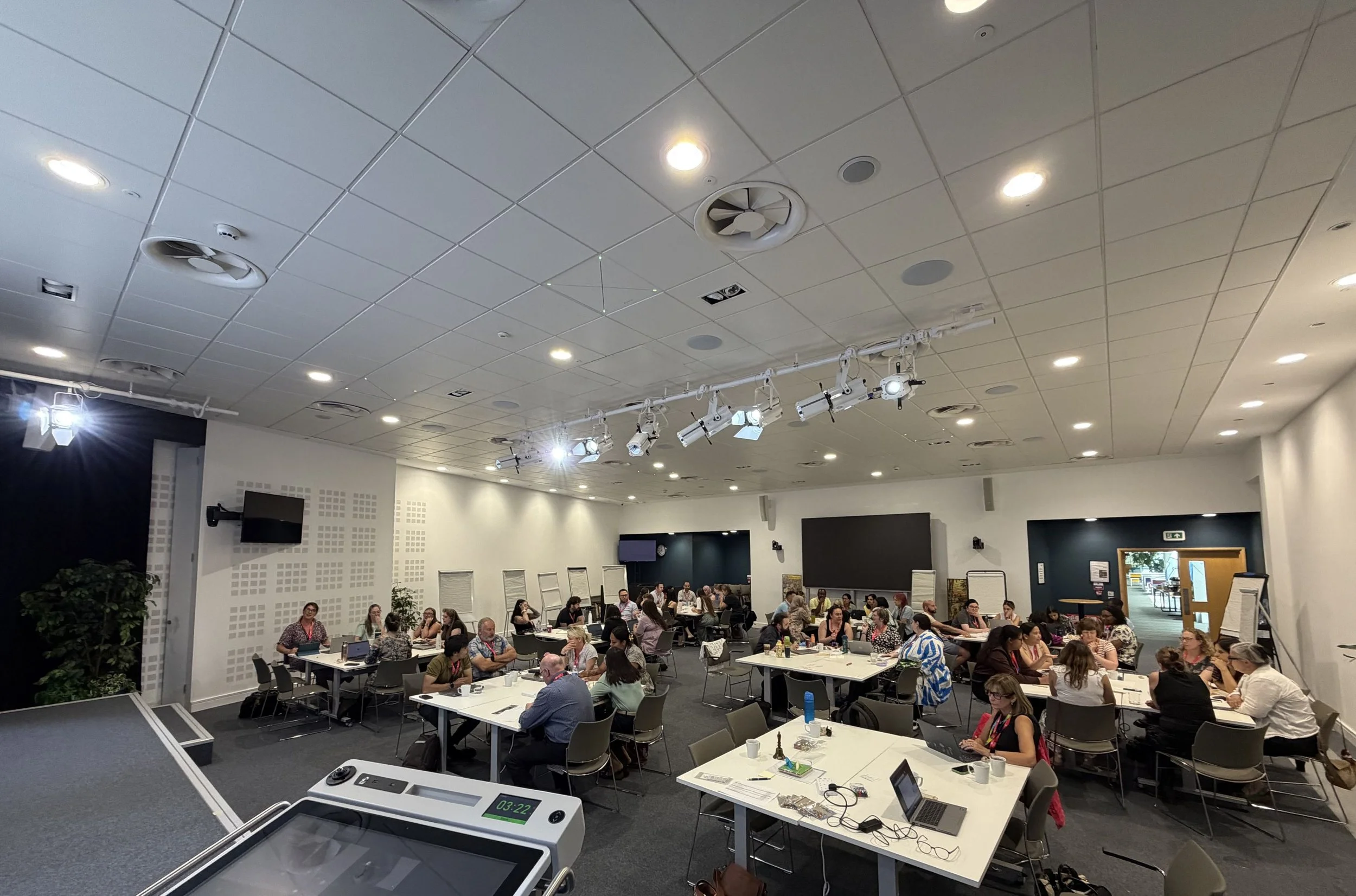
UHS attendees of the EDGE day

EDGE & UHS

EDGE & UHS collaborate

and win Team Excellence Award

We are delighted to share that we recently won a joint award along with The Research and Development (R&D) team at University Hospital Southampton (UHS), for Team Excellence in the Management of Clinical Data. This award follows our collaborative work with the team at UHS on developing an innovative approach to support remote monitoring during the coronavirus pandemic using our EDGE Programme.

We picked up the award at the ceremony hosted by the Association for Clinical Data Management (ACDM) on Monday 6 September 21, which was held in Manchester at the Innside hotel. The event was sponsored by another CIRU service, CORE, and showcased achievements in the management of clinical data and had over 100 delegates attend from across the country.

After a lot of time and dedication into this project, EDGE is now being successfully used at UHS for remote monitoring, allowing sponsors to access trial information remotely, limiting the need for them to visit the site in person. This was something that was proving a real issue at the start of the pandemic.

The team from UHS have led this innovation whilst working closely with some of our EDGE team members, and we are thrilled that they have had recognition of their hard work as well as recognition for what has been a successful collaboration between both teams.

Kim Lee, Senior Q&A Lead at the NIHR Southampton Clinical Research Facility (CRF), UHS, led on ensuring effective governance and information security for the project. Herself and colleagues overcome many hurdles and challenges through a very long process.

Following the outcome of the award Kim has shared this comment:

“We are thrilled to have won this award, it is testament to the determination and hard work of the team over the pandemic.”

For more information check out the September 2020 CRN Wessex article looking at the process that the R&D team went through to create the tool.

Patient information & data linkage

EDGE.jpeg

Across the UK I don’t think there are 2 hospitals that collect exactly the same information about patients and participants on EDGE, each organisation varies. This is usually dependent upon a number of factors including size of the organisation, what their research portfolio looks like, other IT infrastructure already in place and lastly the depth of the implementation of EDGE within clinical teams.

There is also a clear emerging trend in interest from the Department of Health about what the national research portfolio looks like in depth, originating out of reports such as the Children, Teenage and Young Adults Cancers report, collated by the National Cancer Registration and Analysis Service.

Collecting Dates of birth, or age, on EDGE in order to comply with the CTYA reports as well as to expand this further than Cancer have come up in more and more discussions over the past year and this has often raised the question about collecting the data in EDGE. Some Hospitals allow their staff to collect patient identifiable information in EDGE, others do not and this is wherein part of the challenge lies. Whilst EDGE is capable of collecting the data, the next challenge is getting the Caldecott Guardian to understand and authorise this process. Even once you are at this point, the final challenge is to ensure clinical staff actually enter the data.

Capturing patient information on EDGE has often been misconstrued, a few examples of which I will give:

We once had a call to our office from a Chief Investigator demanding that we delete all the data relating to their research from EDGE, because it was their data, not ours. We explained that it is actually the hospitals data, not the CI’s and certainly not the EDGE teams. The data is collected by the hospital in a system they contract the University of Southampton to provide, in order to manage the delivery of their research services.

In the past I have spoken to an R&D department who would not let clinical staff enter any patient identifiable information because the R&D department did not need that information. This is in itself a very interesting point and one that is easily misunderstood. Historically R&D systems have been silo’s of information only capturing information relevant to R&D. EDGE expands across the boundary from R&D to Clinical teams, providing a platform for clinical staff to track and manage their patients through the life of the project, aiding those clinical staff in providing their legal duty of care to that patient. Therefore clinical staff entering patient identifiable data is not for R&D, but for their own duty of care.

Interestingly, this leads on to the discussion of consent. A number of Caldecott Guardians that I have spoken to who have prevented staff from capturing patient identifiable information on EDGE have done so with the justification that the patient has not consented to have their information stored. This is where there can be an easily confused line between patient care and research. The patient data being stored on EDGE is not answering the research question, the data for which goes into the Case Report Form and subsequently to the sponsor. The data in EDGE allows the clinical staff to provide direct care to the patient, the terms and legal justification of which can often found under an organisations Privacy Notice. The data is also not being given to the University of Southampton, we are simply providing a contracted service for the provision of the system.

Once you reach the point that R&D and the Caldecott guardian are on board, now the real challenge comes to engage the clinical teams. This can be extremely challenging and can vary on a team by team basis, for example, some teams may already have access to IT systems that meet all their needs, whether these are bespoke systems or products such as the calendar in Microsoft Outlook. A misconception is that the Electronic Health Record system in a hospital captures all the information needed for patients. In standard care that might be the case, but often not in research, leading to clinical staff keeping having to find combinations of other systems to use. From my experience, clinical research staff tend to keep a lot of spread sheets to meet these needs and this is where, when implemented in depth, EDGE can replace the need for a lot of those other systems. Thereby providing a useful tool to the clinical staff and cutting down on data duplication.

Now, if the clinical staff are able to use EDGE to facilitate them in managing their research, and NHS numbers can be recorded, this opens up the door to many opportunities for data linkage to answer the questions from the Department of Health and other bodies. A simple NHS number, combined with NHS Spine could mean that supplementary information such as Date of Birth do not need to be captured on EDGE (if the clinical staff  don’t need it for the patients care) as this can be provided through data linkage.

Using the NHS number alongside patient records is something that has been encouraged for a long time, with the Information Governance Alliance advising ‘The NHS Number should be used in Health and Social Care Organisations and environments as long as the purpose is to communicate with those who are involved in providing care’.

Or alternatively the previous NHS Medical Director Professor Sir Bruce Keogh, who was the Senior Responsible Officer for the NHS Number Programme, saying: “We should no longer accept the level of misallocated records and the misidentification of patients as inevitable or normal.  We must change the way we work and identify all patients by their NHS Number which will reduce potential errors and harm in the future.”

The NHS Business Services Authority takes a similar stance in their ‘Pseudonymisation and anonymisation of data policy’, ‘If patient data is required the NHS Number is the most secure form of identifiable data. The NHS Number should be included within all patient records and documentation in line with the current Connecting for Health NHS Number Campaign.

And finally, in the NHS Standard Contract 2017/19 and 2018/19 Service conditions, it states:

‘NHS Number

23.4 Subject to and in accordance with Law and Guidance the Provider must:

23.4.1 ensure that the Service User Health Record includes the Service User’s verified NHS Number;

23.4.2 use the NHS Number as the consistent identifier in all clinical correspondence (paper or electronic) and in all information it processes in relation to the Service User; and

23.4.3 be able to use the NHS Number to identify all Activity relating to a Service User.’

I have written this not to enforce any organisation to use the system in any particular format, but instead to show that there is a legitimate argument to collect certain information which in turn could provide benefit to system users, as well as being able to easily link data to provide reporting capabilities that future proof research reporting, both locally and nationally. However, it is up to each organisation to choose the functions within EDGE they use, and I hope that if this is a path you wish to take, that this has been helpful.

Update from Dave Osler

Dave Osler.jpg

Well it is safe to say that the last few months have been somewhat eventful to say the least. The GDPR D-day has been and gone along with so much work happening across the NHS and academia to prepare for. It certainly feels like everyone has a better understanding of their data now and are more conscious about how it’s justified, where it’s stored, how long for, who the data controller is, alongside all the other stipulations and requirements of the regulations.

Clinical research data capture has for a long time been highly regulated and controlled due to the many other directives and frameworks under which we operate meaning that we should all have been in a fairly strong position to steer ourselves to GDPR compliance. As one University said to me ‘it’s not clinical research we are worried about so much, it’s research across other faculties’. This is where we come to realise that outside the sphere of clinical research, not all protocols include the basics such as a data management plan.

In line with our dedication to high quality research management, every member of the EDGE team from developers to account managers, Head of Operations to our directors PA have completed their GCP training alongside mandatory GDPR training.

We are starting to develop the next stage of the EDGE – CPMS interface called ‘SetStudySites’. This will transfer project sites from EDGE in order to create those site records on CPMS, therefore reducing the need to enter the same site data on 2 separate systems. This will lead us gradually towards our shared vision of a truly integrated research system.

Celebrating Collaboration

Collaboration at EDGE Clinical Research

Trying to summarise the changes that have occurred during the past 12 months within the Clinical Research Networks with which we work so closely is too big a task for one evenings work and I’d only be scratching the surface which wouldn’t really do it justice. Therefore I’m going to concentrate on an aspect that has almost come as an unintended side effect.

The procurement and implementation of LPMS systems across England has been challenging, time consuming and to some very frustrating. To others the provision of a system to manage their research portfolio on has been a blessing, allowing them to reduce the number of onerous spread sheets that contain silos of information and combine this all into one place.

This implementation of a single system across an entire network geography has created an opportunity for people to come together and discuss the issues they are having with their research management. R&D departments especially are sharing more and more advice and support with each other and through this are helping create new standards and ways of working that will drive forward research management. These communications networks that have formed amongst research staff haven’t been forced, they haven’t been the result of a new policy or countrywide attempt to make people communicate more. They have come as a result of people willing to share their hard work with others, and people willing to pick up the phone and ask how someone else has done it.

There is still a long way to go and we really have only skimmed the surface of what can be achieved via collaborative working like we have seen, but what we have seen so far has been more than anyone expected. Who’d have thought databases could have such a social effect on people!

By Dave Osler (EDGE Knowledge Officer)