
User Profile
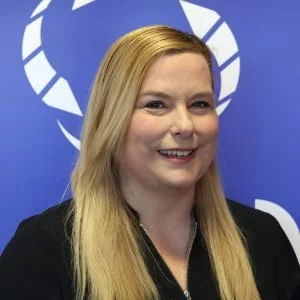
Full Name: Diane Mackey
Email: Diane.Mackey@westerntrust.hscni.net
Organisation: Western Health and Social Care Trust
EDGE user since: 2018
About you
1. How and why did you move into your current role within clinical research?
After completing my law degree, I joined the Western Health and Social Care trust around 2011 and worked in Medical HR before moving into Research in 2018 as a Research Facilitator. The research facilitator role gave me practical experience of study set up, research governance and supporting research teams. I progressed to R&D Manager in 2021.
Moving into research management gave me the opportunity to build on this experience and take a wider role in developing and supporting the research service. I was particularly motivated by the contribution effective governance makes to opening studies safely and efficiently, enabling access to additional treatment options beyond standard of care and supporting research with the potential to improve health outcomes.
2. What does your role at WHSCT entail on a typical day?
No two days are quite the same. As R&D Manager at Western Health and Social Care Trust, based at C-TRIC, my role combines research governance, operational oversight and service development.
A typical day can involve reviewing new studies and modifications, co-ordinating capacity and capability assessments, advising investigators and research staff and working with sponsors and supporting departments to progress study set up. I also oversee procedures, governance training, quality improvement and inspection readiness.
I also work closely with our Research Nurse Manager, who leads the day to day management of the research nursing team.
Alongside this, I review research activity, resources and financial information to support planning and reporting to research finance meetings and Research and Development Board.
My focus is on bringing people and processes together so that studies can open safely and efficiently and our teams have the support they need to deliver high quality research.
3. How does the patient and research landscape currently look at your site/organisation?
At the Western Health and Social Care Trust, we support a varied portfolio of commercial and non-commercial research across specialities including cardiology, cancer, respiratory medicine, renal medicine, rheumatology, stroke, intensive care, gastroenterology, diabetes, obesity, endocrinology and motor neurone disease.
Our R&D service is based at C-TRIC supporting research across Altnagelvin, South West Acute Hospital, Omagh and Gransha sites. Our portfolio includes studies actively recruiting participants alongside those providing ongoing treatment or longer term follow up.
An exciting recent development is the introduction of a mobile research unit in September 2026, showcased at the TMED11 conference. As part of a regional initiative to widen access to research, it aims to bring opportunities closer to communities, particularly people who may face geographical or other barriers to attending hospital based research appointments.
We work closely with investigators, research delivery teams and supporting departments to develop research opportunities that reflect our population needs. Our focus is on widening participation, providing access to research opportunities and treatment options beyond standard care, and helping improve future healthcare outcomes.
Your use of EDGE
4. You are relatively early in your EDGE journey at WHSCT. How do you currently utilise EDGE in your daily role?
I have used EDGE since joining the research team in 2018, so it is an established part of my role. It provides a central overview of our research portfolio and helps to review study status, screening and recruitment activity, prepare reports and identify areas requiring follow up.
We are however at an earlier stage in developing our use of EDGE’s finance functionality. This is an exciting next step in making the information we hold more useful for financial oversight and service planning. This presents exciting opportunities to strengthen financial oversight, reporting and service planning.
5. Your team has recently focused on implementing and embedding the EDGE finance modules. What did this implementation process look like?
We are currently working as a team to develop use of the finance package. Our starting point is understanding what information we need for invoicing, monitoring research activity and reporting, and how this should be recorded within EDGE.
We are currently working with our Financial Team on business intelligence reporting for the Research Finance Committee and R&D Board. The aim is to ensure that the way we capture information supports the financial processes and management reports we need.
Alongside financial measures, these reports will help us understand how effectively we are delivering research opportunities for patients and support strategic decisions about future growth.
6. How do you plan to leverage EDGE to align your data processes with your newly embedded financial management workflows?
I would like to establish a clear link between research activity, the payments due under study agreements and the information needed to support invoicing and service planning. Consistent, timely recording will be important, together with clear responsibilities for checking information and progressing invoice requests.
Our work with the finance team will help agree how research and financial information can be brought together for reporting. The aim is to provide a reliable picture of activity, income and outstanding actions, with appropriate reconciliation to Trust finance records.
7. What key performance metrics are you prioritising for formal reporting, and what value do you hope they will bring to the Trust?
My priorities are study activity and recruitment against targets, alongside the financial position associated with that activity. This includes activity eligible for invoicing, invoice requests, invoices raised and outstanding income. I would also like to strengthen our understanding on anticipated income, recognising that this depends on recruitment, study delivery and contractual milestones.
For the Research Finance Committee and R&D Board these measures should provide clearer oversight of research performance and financial sustainability. They will help identify delays, support timely cost recovery and inform decisions about staffing, resources and future research opportunities.
8. Implementing a new system or module can come with its own set of challenges. What advice would you give to other Data Managers or Trusts who are also early in their EDGE journey and looking to embed financial or reporting processes?
Although we are still developing our approach, my advice would be to start with what you need the information to advise you on. Involve research staff and finance colleagues early, agree responsibilities and make sure everyone understands how the information they record will be used.
Keep the process manageable and build data quality checks into routine working. It is also important to distinguish research activity, amounts eligible to be invoiced and payments actually received so reports give a clear and accurate picture.
9. What are your/site’s plans for further developing and expanding your use of EDGE once the formal KPI reporting is fully established?
Once consistent reporting is established, I would like to use the information more proactively to understand trends, anticipated income and support workforce and service planning.
I also want to explore how we can reduce duplicate recording and make reporting more efficient. Ultimately, the aim is to give the Research Finance Committee and R&D Board meaningful information that supports decisions about sustaining and developing research across the Trust.
Clinical research
10. What is your “bigger picture?” That is, what do you find most fulfilling about your job?
For me, the bigger picture is helping turn research opportunities into studies that can make a difference to people’s lives. Much of my role happens behind the scenes, but effective governance and co-ordination are essential to getting studies open safely and supporting their successful delivery.
I find it particularly fulfilling when the work we do enables access to treatment options beyond standard of care, while contributing to evidence that could improve future healthcare. Bringing colleagues together, helping resolve challenges and seeing our research service develop makes the role rewarding as well as widening access and helping to reduce barriers to research participation.
11. One clinical research superpower that you wish you possessed:
The ability to press a 'fast-forward' button on study set-up, with every question answered, every department aligned and every governance requirement already in place! Seeing a promising study move smoothly from feasibility to opening would be a very useful superpower!
Personal touch
12. One thing that inspires you:
People who use their experience to make a positive difference to others. Through my work and volunteering, I have seen the value of listening, showing compassion and being willing to speak up. Even small actions can make a meaningful difference to someone’s life.
13. One thing that people might not know about you:
Alongside my employment I undertook voluntary roles involving independent oversight of people’s welfare, treatment and rights in custodial settings. Although it is a very different environment from research, listening carefully, asking questions and following issues through are skills that apply equally in both worlds. These experiences strengthened my interest in accountability and governance, alongside my communication and independent judgement skills.
Interview by Ken Brackstone: k.brackstone@soton.ac.uk