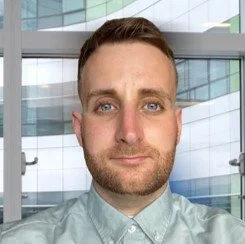
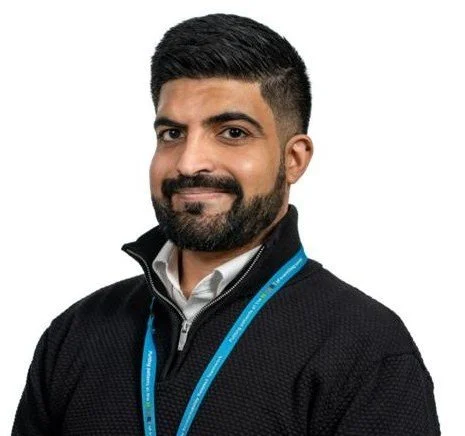
Full Name: Shyam Thakrar
Job Title: Senior Specialist Pharmacist, Clinical Trials
Email: shyam.thakrar@nhs.net
Organisation: London North West University Healthcare NHS Trust
EDGE user since: 2022
About you
1. How and why did you move into your current role within clinical research?
I actually moved into clinical trials partly by chance. A temporary pharmacy clinical trials rotation was created, which gave me my first real opportunity to experience research pharmacy. I really enjoyed the variety, problem-solving and the opportunity to contribute to something that could ultimately change patient care, so when a permanent opportunity became available, I went for it.
It has come full circle because I am now working on reintroducing rotations for pharmacists, pharmacy technicians and trainees. I want more people to be exposed to research early in their careers and see it as part of everyday healthcare rather than something separate from it. Longer term, I would love to see similar rotational opportunities extended to other healthcare professionals.
2. What does your role as Clinical Trials Pharmacist at Central Middlesex Hospital entail on a typical day?
There probably isn't a typical day, which is one of the things I enjoy about the role! I oversee the day-to-day clinical trials pharmacy service at Central Middlesex Hospital, from feasibility and qualification visits through to site initiation and the ongoing delivery of studies.
Alongside operational delivery, a significant part of my role is service development. I work on projects to expand our research capacity, improve processes and make better use of digital tools such as EDGE. Increasingly, I am looking at how we can use technology and data not just to save time, but to improve oversight, make better decisions, support our Trust's Green Plan and create a more sustainable pharmacy clinical trials service.
3. How does the patient and research landscape currently look at your site/organisation?
LNWH Trust spans three main hospital sites, and we currently support approximately 80 CTIMP studies across them. The growth has been significant, from around 35 CTIMPs in 2023 to approximately 80 in 2026. We are also one of three London NHS Trusts designated as a Commercial Research Delivery Centre.
That growth means our systems and infrastructure need to grow with us. Historically, many of our processes have been paper based, but we are moving towards a much more digital way of working. EDGE has become an important part of that journey, helping us streamline data management, improve financial transparency and give us better oversight of our research activity.
Your use of EDGE
4. You’ve been using EDGE for over 4 years. How do you currently utilise EDGE in your daily role?
Our Trust's use of EDGE started relatively slowly, but over the last 12–18 months we have really accelerated how we use it and started to see the benefits.
We now use EDGE for areas including study management, workflows and finance. For me, one of its biggest benefits is having information in one place rather than relying on multiple spreadsheets and paper-based processes. It has improved efficiency, communication between pharmacy and the wider R&I team, and supported our move towards greener, more digital ways of working. What excites me now is exploring what else we can do with a system we already have.
5. As a support department, your team has actively pushed to implement EDGE finance. What challenges did you encounter during this implementation, and how did you successfully get everyone on board?
One of the biggest challenges was that everyone was already busy. Understandably, introducing another process can initially feel like adding another task rather than removing one.
Rather than trying to implement everything at once, we decided to demonstrate the benefits. Pharmacy worked directly with our finance manager and implemented EDGE Finance within our own service first. This allowed us to show how it could reduce spreadsheet duplication, improve cost recovery and give finance a single source of information rather than receiving separate spreadsheets from different teams.
Once people could see the benefits in practice, engagement became much easier. Updates following contract amendments, recording activity and reviewing costs can all be done within the same system. It has also opened up opportunities beyond invoicing, for example, having more accurate up to date figures of current recruitment and study income, allows us to forecast potential revenue and provide evidence for business cases.
For me, that was an important lesson in change management: sometimes the best way to get people on board is not to tell them something will work, but to show them.
6. Now that EDGE Finance is fully embedded, how has it changed the day-to-day financial tracking or cost recovery for clinical trials within the pharmacy department?
We have only recently fully implemented EDGE Finance, so we are still refining the most efficient way of working and collecting data on the time savings.
However, we are already seeing benefits. Previously, quarterly costing could involve going back through individual trial folders, identifying dispensing activity, shipments and reimbursements, recording these on spreadsheets and then sending those spreadsheets to finance, who may then need to maintain their own records.
We can now record many activities much closer to when they happen. For example, dispensing costs and reimbursements can be captured following the activity rather than reconstructed months later.
That reduces duplication, lowers the risk of missed costs and gives finance more timely information. It also provides a more accurate picture of activity and income throughout the year, which can support management oversight, forecasting and future business cases.
Another benefit is managing modifications. Instead of creating new spreadsheets when study costs change, an updated iCT can be uploaded while the previous version remains available as an audit trail.
7. You are now looking at what else EDGE can do to help your departments and patients. What are the biggest operational challenges or manual bottlenecks remaining in the pharmacy department that you hope EDGE can solve next?
Data is probably the biggest opportunity for us next.
As research activity grows, we need to be able to understand our service in real time, not spend hours retrospectively pulling information together from different sources.
I would like us to explore how EDGE can capture more of our operational data as part of our normal workflows and then turn that information into something meaningful. For pharmacy, that could help us understand workload, capacity, income, cost savings and where bottlenecks exist.
Ultimately, better data means better decisions. Rather than relying on assumptions, we can identify where the pressures actually are, demonstrate the value of the service and make evidence based decisions about where we need to invest or change.
8. Clinical trial pharmacy sits at a unique crossroads between strict trial protocols, financial compliance, and direct patient care. How do you see EDGE ultimately improving the experience or safety of the patients on your trials?
We are seeing more complex medicinal products coming through the pipeline, which require greater clinical pharmacy input and oversight.
By using EDGE to reduce the time pharmacy staff spend on administrative tasks, data collection and spreadsheets, we can redirect more of our time towards the clinical management of these increasingly complex medicines.
For me, that is where the real patient benefit lies. More time can be focused on ensuring medicines are managed safely, identifying potential risks, supporting the wider research team and enabling us to deliver increasingly complex studies.
Greater efficiency can also create capacity to support more research, ultimately giving more patients access to clinical trials and potential new treatment options. EDGE therefore isn't just about making administration easier; it's about allowing pharmacy teams to spend more of their time where their specialist clinical expertise adds the greatest value.
9. What are your/site’s plans for using and developing EDGE over the next 6-12 months
We currently use EDGE Finance and workflows, but I think there is much more potential.
One area I am particularly interested in is forecasting. At present, I still use spreadsheets to calculate areas such as predict trial income and drug cost avoidance during feasibility. I would like to explore whether we can use EDGE data, iCT information and recruitment targets to forecast potential income automatically. That could give managers much better information for workforce planning and business cases even before starting the study.
I would also like to explore capturing the wider NHS cost savings generated when medicines are provided by trial sponsors rather than funded through routine NHS care.
I have already had some really positive conversations with Stevie and the rest of the EDGE team about what may be possible. The wider ambition is for the Trust to move away from manually collecting data and towards using EDGE to generate meaningful, real-time information that helps us understand and grow our clinical trials service.
Clinical research
10. What is your “bigger picture?” That is, what do you find most fulfilling about your job?
I enjoy solving problems and making things work better – particularly when a relatively small change can have a much bigger impact.
My bigger picture is helping to build a clinical trials service that is efficient, digital, sustainable and able to support continued growth. Moving away from heavily paper-based processes, improving how we use data and introducing tools such as EDGE Finance might individually seem like small changes, but when I see the time they give back to the team and the wider benefits across R&I, it motivates me to want to find the next improvement.
Ultimately, though, the reason for growing and improving the service is the patient. If we can work more efficiently, build capacity and make LNWH a great place to deliver research, we can open more studies and give more of our patients the opportunity to access clinical trials and new treatment options.
11. One clinical research superpower that you wish you possessed:
Mind reading! Not to find out what people are thinking about me, but to instantly answer one of my favourite questions: “Why?”
There is always a reason why someone is resistant to a change or why a process works the way it does. If I could immediately understand that “why”, I could identify the real barrier and work with people to find a solution much faster.
Although, if the superpower could also collect and analyse all the data into the answers we need, streamline our processes and predict the next problem before it happens, I wouldn't complain!
Personal touch
12. One thing that inspires you:
Seeing the impact that helping someone can have inspires me. Earlier in my life, I had the opportunity to live with a local family in India and work in communities where people had very little. What stayed with me was how much difference relatively small acts of help could make, and the happiness you could see in people as a result. That experience has stayed with me and continues to influence how I approach both my work and life. I find it incredibly fulfilling when something I have done has made things better for someone else.
13. One thing that people might not know about you:
I love travelling and have been fortunate enough to experience living abroad rather than just visiting. I studied in Malaysia for a year and also spent a year living with a local family in India, where I worked within disadvantaged communities providing basic healthcare support.
Those experiences gave me a very different perspective on healthcare, culture and what people value. They are experiences I still draw on today and probably explain why travelling remains one of my favourite things to do.
Interview by Ken Brackstone: k.brackstone@soton.ac.uk