
Me, myself & surveys

Me, myself & surveys

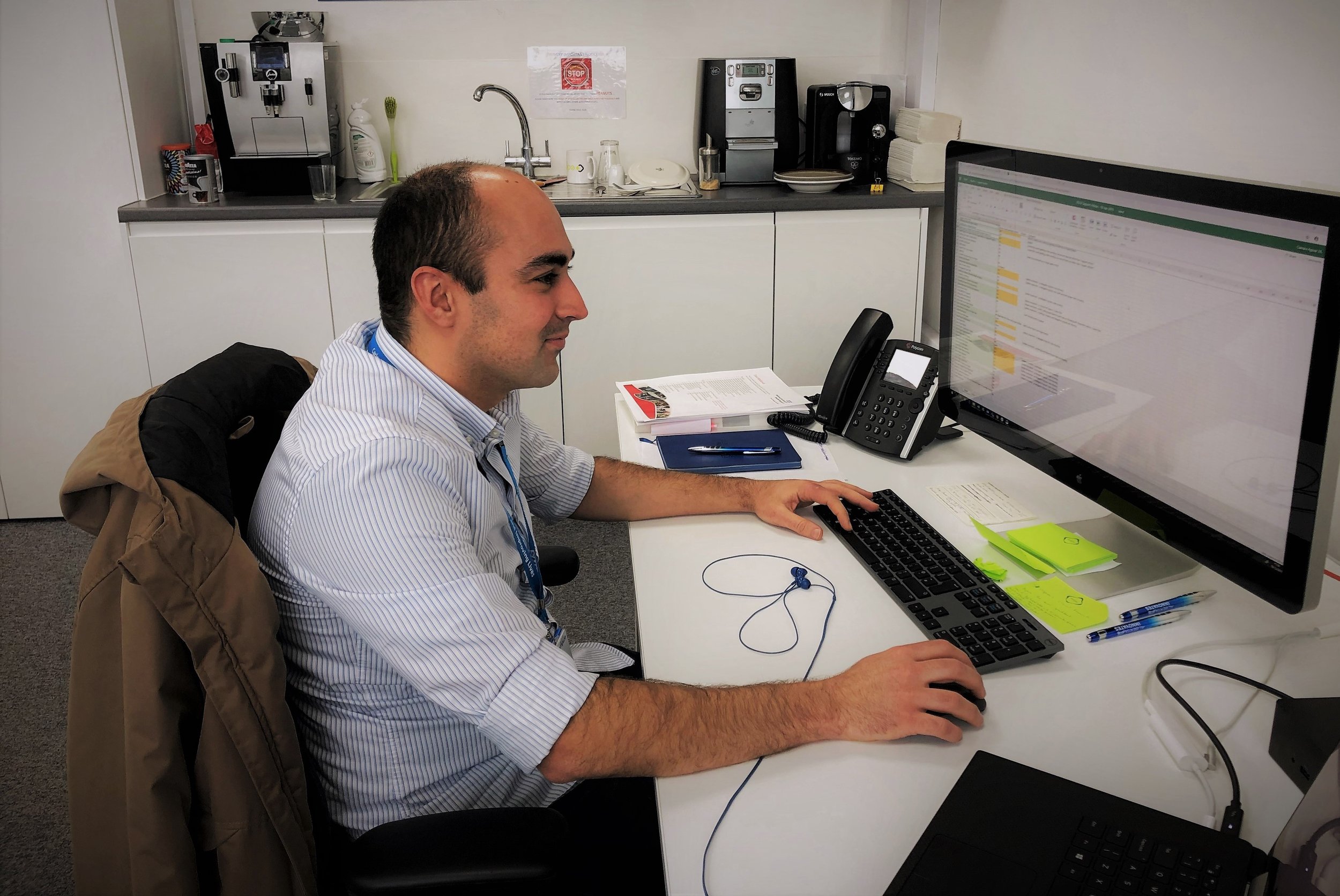
By Dr Ken Brackstone, CIRU Research & Insight Analyst

Over the years, I have acquired somewhat of a reputation amongst my colleagues at the Clinical Informatics Research Unit (CIRU) for being “mildly” obsessed with designing and running online surveys. Erm, I’ll have you know that I do not have a foggiest idea how this rumour could have started…

*Ahem*

Oh, alright - running surveys ARE my favourite part of my job. There aren’t (too) many things more thrilling than utilising surveys to answer complex research questions and contribute to important knowledge gaps in the world. Knowledge is power, after all, and the rich knowledge that you can obtain from surveys contain potential for subtle waves of impact if you know what to ask and how to package your findings. Hint: Ideally with a little red ribbon on top!

My passion for designing surveys began during my 3-year PhD in social psychology, which I completed at the University of Southampton in 2015. It was during this period that my love for running surveys developed, which was a direct result of designing and implementing surveys on thousands of participants in the laboratory and online. My PhD focused on understanding the power of nostalgia – specifically, how nostalgia can be effectively used to “fend off” the harmful effects of loneliness. After manipulating loneliness and making people feel nostalgic in the lab (using sophisticated survey designs – such fun), it turns out that nostalgia is pretty good for you. Feeling disconnected from those around you? Whack on a bit of Spice Girls (or whatever floats your boat) and you’ll soon replenish those feelings of connection.

I joined CIRU shortly after finishing my PhD to work on a clinical pilot project – this was back when there were just 14 people employed in the group. I was the first and original academic in the unit, which, at the time, predominantly focused on EDGE, our clinical trials management programme. The department was vastly different back then compared to present day… in case you didn’t know, CIRU currently employs over 50 staff and is home to a variety of different service and research groups. I remember a few months after joining, I announced to the team that I had intended to trial the unit’s first ever survey administered on our EDGE users – titled “The EDGE Usability Survey”.What did users really think of EDGE?” I set out to ask.

*Cue lots of worried looks amongst my colleagues’ faces – I mean, who on earth was I to suddenly waltz in and disturb the peace?*

After a month of surveying a modest sample of EDGE users, the findings revealed that people were generally very happy with EDGE and the magical things that it can do. A few niggles here and there, but on the whole, survey feedback was good. Phew! A key take-home message was – and forever continues to be – how fundamental training is to perceptions of usability and satisfaction amongst new users. If a new user is thrown in the deep end with no context on how and why they should use it, then resentment will soon harvest and unveil itself in subtle ways. The survey was implemented 3 years in a row and, with the upcoming arrival of EDGE 3 in the coming months, I am sure that the survey will be administered again very soon.

Jump forward to 2022 and I cannot begin to explain my surveying antics! In my role, I am proud to wear a variety of fashionable hats. On the EDGE side, I am an event organiser of the annual EDGE User Conference, often utilising feedback from delegate surveys to guide planning decisions. I am also a data and insight analyst, often pulling out behavioural statistics from Google Analytics to inform EDGE 3 functionality ideas to the Knowledge team. On the academic side, I work alongside some brilliant people in conducting surveys on important current issues with a health or clinical angle. For example, during the past two years since the pandemic, I successfully led a series of online and community surveys to understand sociodemographic predictors of COVID-19 vaccine hesitancy in sub-Saharan African countries, such as Ghana and Togo. These findings assisted Ghanaian policymakers in understanding how and who to target in COVID-19 vaccination campaigns. I am also currently running an online Health Needs survey for Ukrainian migrants and internally displaced people, with the aim to report our crucial findings to national humanitarian and medical organisations to direct support to those who desperately need it.

Data makes the world go round. And surveys are one way to collect new data and translate it into actions that can deliver benefits. I am proud to be in research, and I look forward to seeing what new and exciting surveys I can help deliver in the future. All this talk of surveys… it seems only fitting to end with a survey question, doesn’t it…?

Please rate the extent of your agreement to the following statement:

“I enjoyed reading this blog post”:

1 (strongly disagree)

2

3

4

5 (strongly agree)

Its about time

Its about time

By Lindsay Young, CIRU Programme & Operational Specialist Support Officer

Professor James Batchelor, Director of CIRU and founder of EDGE recently contributed to eNews, the weekly newsletter keeping the University of Southampton’s Faculty of Medicine staff up to date with the latest announcements and news. A few times a year, James writes the “Medically Speaking Blog” for eNews, with various topics ranging from the UK’s emergence from the COVID-19 lockdown to reflecting on the importance of time.

His recent blog, “Making time”, was featured in eNews on 4th February 2022. In this piece, James discusses the absence of time: time for meetings, time for emails, and time for others, never mind time for ourselves.

Quote from James: Unless we can change the turning of our blue marble planet, I believe we’ll be stuck with only 24 hours. It therefore all depends on how we use time.”

Do you feel like your day is out of your control or you have too much on? Someone on a podcast famously once said, “We all have the same 24 hours as Beyoncé”. As James deftly points out, on any given week he could have 33.5 hours of meetings scheduled, leaving only 6.5 hours left to do anything else (assuming he doesn’t eat!) and doesn’t work more than 40 hours a week. One must wonder how many hours of meetings Beyoncé has scheduled in a week. The reality of everyone having the ‘same 24 hours’ simply does not exist. “We need to be better gatekeepers to our diaries and, I dare say, our emails.” It is up to us, as James notes, to manage our time and be mindful of how we use other people’s time.

For more insight and to learn about the potential benefits of chucking your smartphone out the window, read James’s blog by clicking here.

A day in the life of a Knowledge Officer

A day in the life

of a Knowledge Officer

To be honest, one of the reasons I enjoy being a Knowledge Officer (KO) is that the days are never the same. I wouldn’t be able to stay in a job where the days are similar with the same repetitive tasks. Doing the same thing repeatedly always reminds me one of those movie plots where the main characters keep reliving the same day until they find a way to break the vicious cycle. Luckily, the KO position has a broad range of responsibilities and could be described like a ‘Jack of all trades’. Therefore, it keeps my professional life interesting and constantly providing new challenges.

Whenever someone asks me what my job is and I say Knowledge Officer, this usually leads to a couple of minutes of questions about what a KO actually is. My explanation generally revolves around the concept that is a mixture between account/project/product management for an IT clinical research organisation. Normally, it is also useful to describe some of the duties to provide a better picture with the explanation. These duties include, in first place, the support to our users, such as replying to data management, reporting, and training queries. On the other hand, we also have to manage specific projects that differ for each KO within the team (in my case the EDGE/CPMS integration for UK) and deal with enquires of other organisations that want to collaborate with or use EDGE.

Furthermore, we need to envision how EDGE will look in the future by trying to understand the ever-changing clinical research environment. Therefore, we need to keep up to date with developments within clinical research, trends, and changes to regulation. An additional challenge is the fact that EDGE is used in various countries, so we need to have a basic understanding of the particularities of each of them. Ideally, any new functionality would be useful worldwide and benefit most of our users for each of the different countries.

As a KO, we are quite often in a position of a mediator. A good example of this is mediation between EDGE users and the CIRU development team to develop new functionalities. Consequently, we must be able to promote discussions, listen to different point of views, and steer the discussion into a realistic shared goal. The ability to create good working relationships with people of different areas and levels of seniority is essential. In my opinion, one of the most important duties as a KO is to facilitate discussions which can lead to the enhancement of the EDGE system, which then becomes valuable to our users.

A bit of EDGE history

EDGE clinical

A bit of EDGE history

Discover something new about the EDGE programme

The new year marks another milestone for EDGE, reaching 22 years of innovative clinical research management. As we enter the new year, we thought it would be a great opportunity to share some history behind EDGE and how it has grown throughout the years.

Let’s go back to the year 2000 when EDGE wasn’t actually called EDGE, it was called NOTIS (Network Oncology Trial System). Our Director, Professor James Batchelor, at this time was setting up Southampton’s Cancer Research Network, working for the University of Southampton, based at Southampton General Hospital. During this time James realised that no one actually knew what research was taking place on a broader scale, they only really knew what was happening locally. There were no web-based systems in place and all information that was needed to report back to the Coordinating Centre as a CRN was on paper. James knew that they needed to take an existing internal system (NOTIS) and transform it into something that was web-based and would allow other research centres to join and collaborate. The journey began. James and his colleague, David Miller (who was the only Developer at the time), set to work on making the idea into reality.

NOTIS changed in 2002 and it became ETIS (Enterprise Trial Information System). Unfortunately, when people Googled it, they quickly discovered it was the same acronym used for the global elephant tracking information system. This lead to lots of people trying to log in to track elephants instead of clinical trials! As you can imagine, this wasn’t ideal, so the name changed again for a third and final time to EDGE, with version 1 of the EDGE platform launching in 2005. You might be wondering, ‘What does EDGE stand for?’ The fact is EDGE was just a code name and it doesn’t actually stand for anything! Nevertheless, the name has certainly worked extremely well and has developed into the EDGE programme it is today.

Fast forward to 2007, where further members joined the team, including Lawrence Surey and Tobias Carlton-Prangnell. (This meant James and David had more company in the University of Southampton’s basement of the Duthie building!) Lawrence was employed to offer support to end-users and Tobias took the first Knowledge Officer position to manage the EDGE accounts. A year later, our second Developer started, Andy Bush, who along with James, David, and Lawrence, are still working here today.

As the years passed, more and more members joined the department to support the ever-growing EDGE user-base and as of today, EDGE is implemented in over 80% of the NHS throughout the UK whilst making an impact globally. EDGE subscriptions are now throughout Canada, as well as within a number of other countries including New Zealand, South Africa, Belgium, India and South Australia. We support over 32,000 users with still a relatively small team of 5 Knowledge Officers, 4 Developers, 1 Test Analyst and 1 Data Analyst. The department as a whole (CIRU) has grown massively, however, with close to 50 staff members, the majority of whom work on non-EDGE related things.

A lot of people think we (EDGE) are a commercial company, making lots and lots of money, with hundreds of staff but they couldn’t be more wrong. We are just a small team from a not-for-profit University department, but it’s safe to say we are doing BIG things.

3 (well 4) reasons to update your web browser

3 (well 4) reasons

to update your web browser

One of our key aims here at EDGE and The Clinical Informatics Research Unit, is to ensure that our users get the very best out of EDGE. One thing that can certainly help towards this and is something we try and encourage as much as possible, is ensuring that our users’ web browsers are kept up to date. “Why?” I hear you ask. Here are 3 (well 4) reasons why.  

1.)    Performance
Having an up to date browser means that EDGE will perform to the best of its ability – it is a web-based application after all. Especially in relation to its speed, which is of course very useful when you are needing to run those big reports with large amounts of data. Not only are old browsers much slower than the new ones, but they are also more likely to crash, which isn’t what anyone needs in their busy working day.

2.)    Display
Using an old browser can cause webpages to not appear how they should. For example, images may not be displayed and the display of content could be misaligned (definitely not what you want after all that data entry!)

3.)    Security
And, of course there is the security issue. Old browsers are much more prone to viruses, spyware and other threats, so it really is important to keep them up to date and your work secure.  

Oh, and there is one more reason why we recommend your web browser is updated. How could I forget? If you’re reading this and you’re one of our users of EDGE, then you should hopefully already know that we are working on a new version of EDGE, which we have been referring to as ‘EDGE 3’. In preparation of the launch next year, we are urging users to update their web browsers in order to get the best out of what EDGE 3 has to offer.

We also want to ensure that users are using one of the following up to date browsers: Microsoft Edge, Safari, Google Chrome, Mozilla Firefox or Opera. EDGE 3 will still operate on Internet Explorer 11, however this will come to end of life support from Microsoft on June 15th 2022. Therefore, we recommend that you switch to one of the other browsers mentioned above. We also recommend that users request help and support from their local IT team in updating their web browsers.

Hopefully this post has been useful in explaining why web browsers should be kept up to date, and that it encourages our users to check their browsers and update where necessary. If you do have any EDGE and browser compatibility questions, feel free to contact us.

Thank you for taking the time to read this post. And if you are an EDGE user, thank you for your continued cooperation and involvement with the EDGE programme.   

Developer to Dr

Developer to Doctor

and back again

So you are a ‘Dr’, an actual medical Doctor? Is the question often asked when my wife insists I use my actual title; all the more confusing when I say I am a software engineer! So, a little explanation as to how I came to join the EDGE team in CIRU.

My family jokes that I learnt to code before I could read and write properly, and they are probably right. I loved computers, coding, and everything electronics. It was assumed and fostered during my school years, that computing was what I would go into career wise. However, age 6 I was also already interested in how computing and technology could help medicine; I even designed a chip to go into someone’s spine to cure their paralysis, all be it a very crude drawing.

After completing my computing degree and working in the industry for several years I became disillusioned and wanted to use my skills for a more front facing role which directly helped people. Surrounded by early career doctor friends I was encouraged, and completed my chemistry A level in 7 months, took the relevant GAMSAT and UKCAT tests, which led to interviews at medical schools for their 4-year degrees specifically designed for graduates.

My BM4 studies at the University of Southampton were challenging and fascinating. Personal highlights were neurology, psychiatry, and GP. As a foundation junior doctor, I had the privilege of caring for patients. I realised, however, that I would be able to contribute much more to medicine and patients care, if I used my knowledge and skills from both areas, computing, and medicine.

My time working within the computing industry gave me significant knowledge and insight into how software and systems are designed, developed, maintained, and the limitations that are ever present and need to be considered. Alongside this, an understating of producing software for end users and working with them to understand their needs.

My time working within a hospital gave me personal experience of the significant time pressures health care professionals are under. This is also an environment where frequently both paper and computer-based systems co-exists. I also gained real insight into areas where things could be achieved much faster; if the computer systems were created with a significant focus on allowing nurses, doctors, midwifes etc. to achieve the non-hands-on parts of their job, quickly and directly.

Working for CIRU within the Faculty of Medicine at the University of Southampton brings opportunities to combine my skills and knowledge of medicine and computing. I am currently one of the developers working on EDGE, working in a team with a strong aim on producing a clinical research management system which efficiently meets the needs of the users.